Author Archives: Smig van Basterd

Unknown's avatar

About Smig van Basterd

An artist in progress.

Understanding Colour 3 – Broken or Tertiary Colours

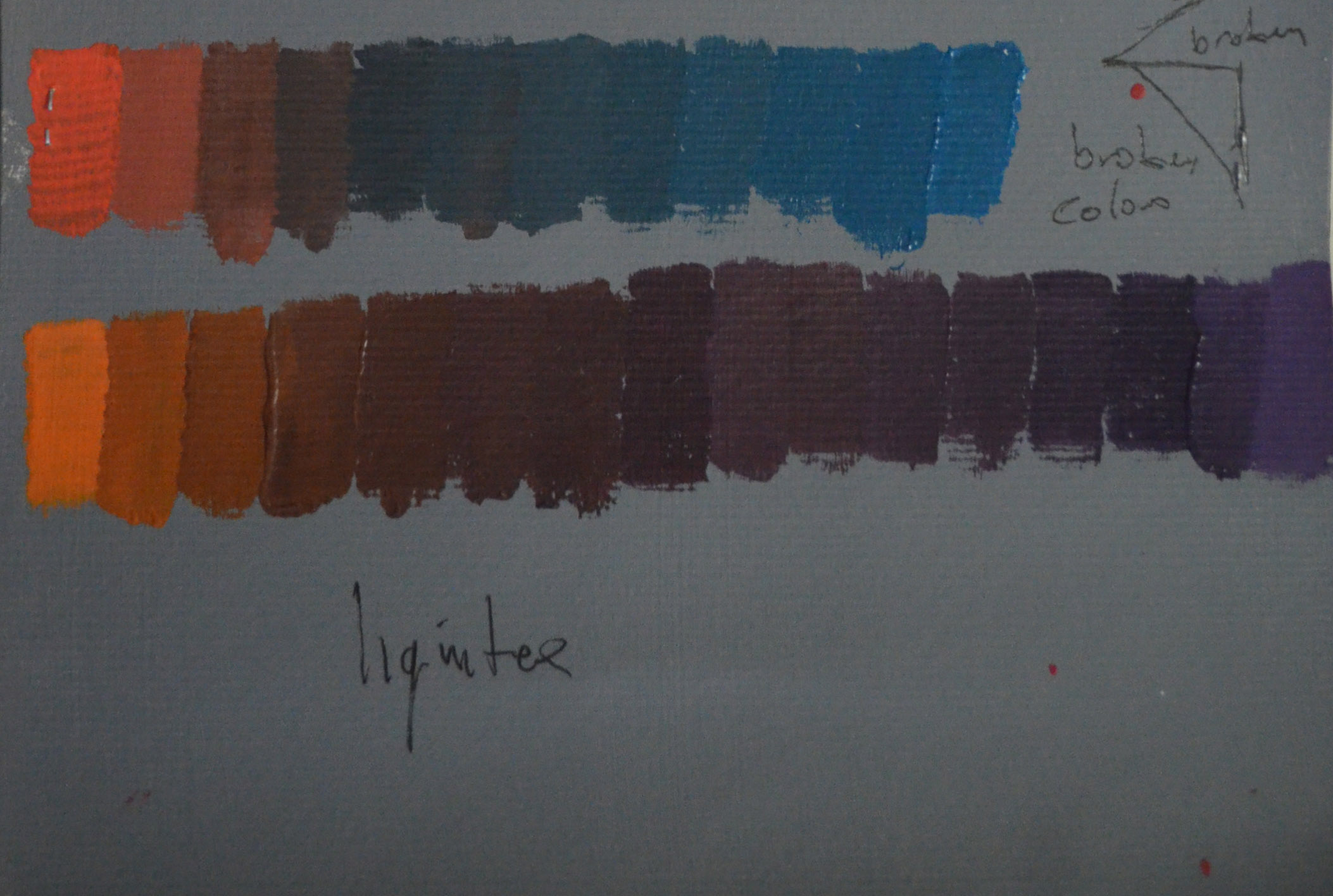
Make a scale between an orange red and a greeny blue. Try to maintain constant tonal values across the scale by adding a little white, as you did in the previous exercise. At the mid point at more white the result should be grey. This is known as a broken or tertiary colour and this type of colour makes up the appearance of much of our world.

In this part of the exercise I worked from brilliant red which had a very orange hue to turqoise as can be seen in the upper scale in the image. The middle mixes are more of a blue-green grey which isn’t very clear from the photo. Working with these orange red and turquoise produced some very interesting and quite pleasant broken colours which did surprise me and it has got me interested in experimenting with colours in future paintings.

Broken or Tertiary Colours

Broken or Tertiary Colours

Make a carefully graded scale between a pair of secondary colours choose either orange to violet, green to orange or violet to green. Mix in white to maintain equal tones throughout (the lightest tone is orange). Once again the middle mixes lose chroma to become broken/tertiary colours.

Here I worked with orange to a blue violet but lightened it up with white to take away some of the blue hue. These two colours produced more interesting colours than the first scale, here are some of the colour mixes that I made using these two colours as some are hard to describe, Orange, Ginger, Red-Brown, Chocolate, Grey – Brown, Brown-violet, and various tones of grey-violet.


Understanding Colour 2 – Primary and secondary colour mixing

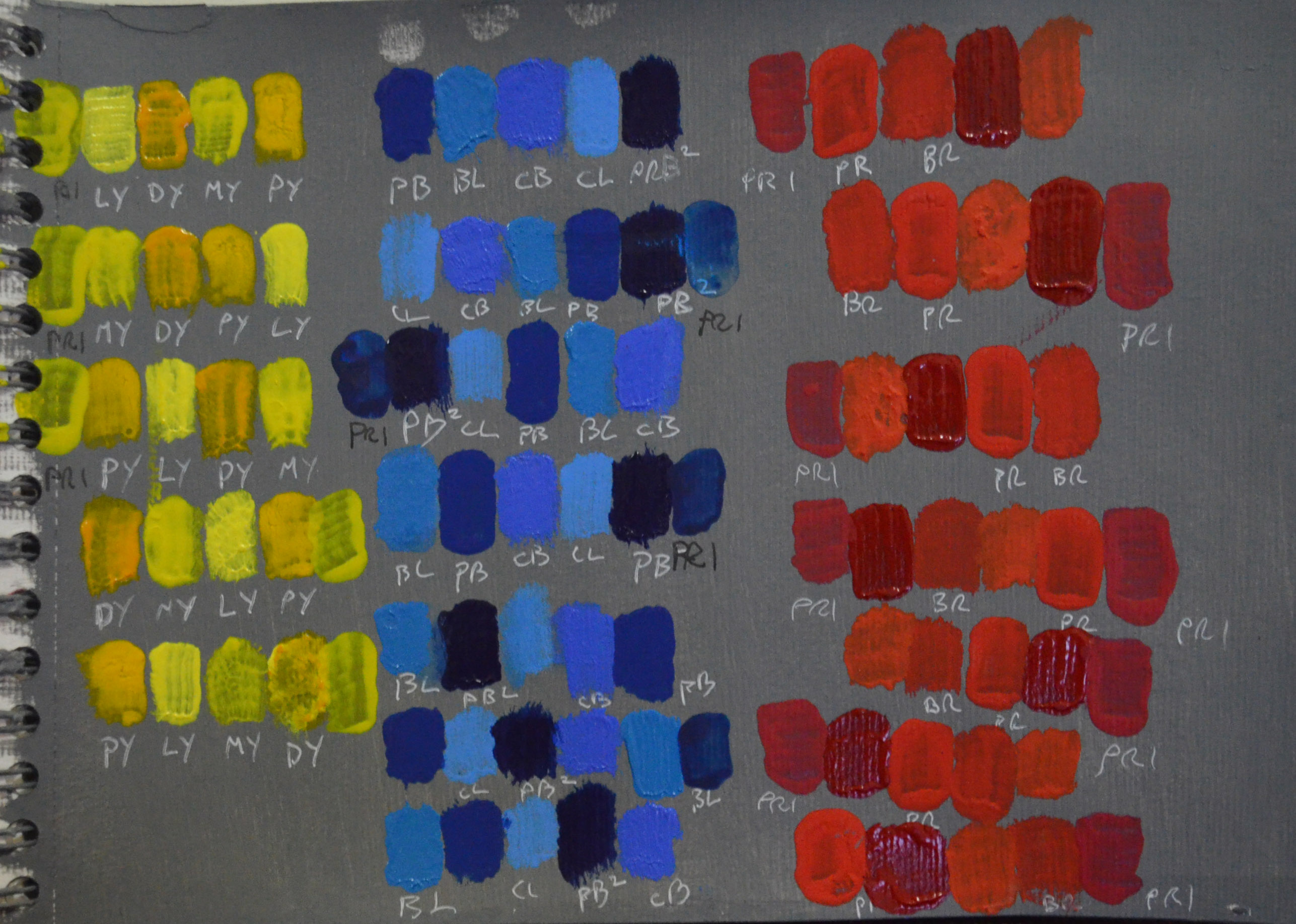
First, identify your primary colours. Begin by laying sma ll amounts of pigment onto your palette, arranging them in yellows, reds, blues etc.

Working on an area of your prepared grey ground, lay all the yellows next to each other so that they touch but don’t mix. Notice the difference in hue (the way that one colour is distinguished from another), chroma (the intensity of colour) and tone (how light or dark it is). Arrange the yellows in different sequences and how different juxtapositions alter the appearance of yellows. Make note of which is the more intense yellow.

Continue with this  exercise using both your blues and reds, you will need to mix a bit of white to see the hue of dark reds and blues properly as these pigments tend to be more transparent.

Identifying Primaries

I really should buy more oil paint colours and started working with oils for some exercises as the acrylic paint i uded for this exercise was very transparent, especially against the grey background, and I did use various brands and qualities.

Identifying Primary Colours 1

Identifying Primary Colours 1

Identifying Primary Colours 2

Identifying Primary Colours 2

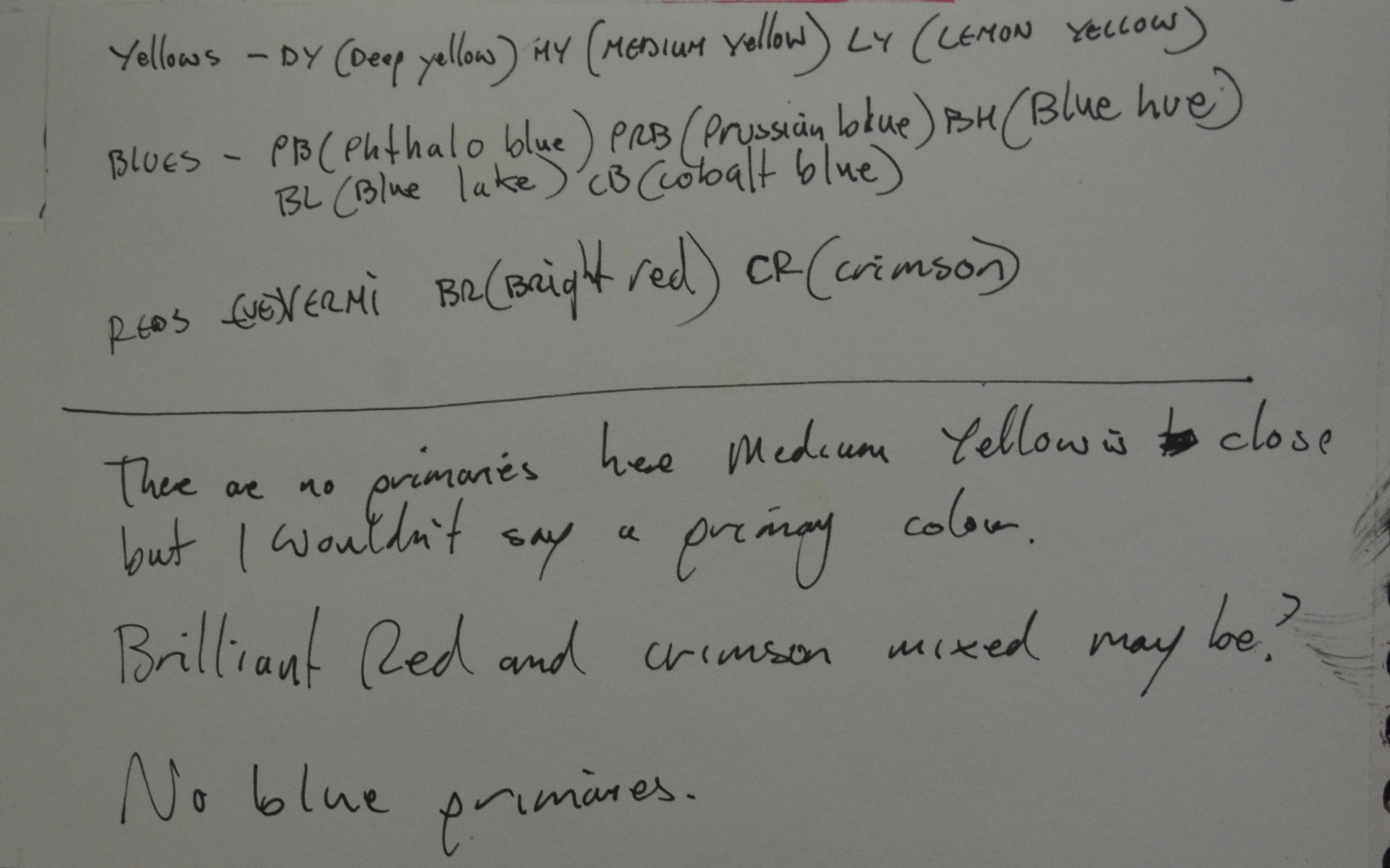
I started by laying down all the yellows that I had which wasn’t a lot, lemon yellow, deep yellow and medium yellow. For blues I had Phthalo blue, Prussian blue, cobalt blue, blue hue and blue lake and reds Vermilion, bright red and crimson, there were no primaries in any of the colours, each of them showed sign of other hues and to be honest I really didn’t know what a primary red, blue or even yellow looked like so to be safe I thought it was time to buy primary colours just so I knew.

Identifying Primary Colours 3

Identifying Primary Colours 3


Identifying Primary Colours 4

Identifying Primary Colours 4

Not having much cash left to last the month the next day following day I purchased three acrylic paints made in Thailand, a red, yellow and blue. They said primary colour on the tubs, but when I got home I realised it was probably a company slogan the paints were very runny, very transparent and very ‘crap’. Still I decided to work with them for now. The red was too bright and didn’t mix well with the Louvre crimson, the yellow was too golden but the blue was ok just too runny.

Using what I had for now I laid them all down in strips touching each other and what I noticed was working in different sequences I not only got to see how each colour looked next to another, different tones etc but it also allowed me to see hints of other primary colours within their hues.

Primary Colour Mixing

Mixing Primary Colours

Mixing Primary Colours

I began by mixing yellow to red, then yellow to green and then blue to red, which should have been red to blue without white. These mixes can be seen above in the first 6 scales, the mixes were unstable (if that’s the right word) murky and transparent with no steady progress from one mix to another.

The next day I did what I should have done in the first place and bought some better colours.I was hoping for Louvre but there were no primary colours so I had to settle for liquitex which was the only brand with primary colours in stock. This time I mixed in a bit of white for each one.

Mixing Primary Colours 2

Mixing Primary Colours 2

The results were a lot better, the colours were less transparent this time, the colours at the middle were less murky and  the tones were very even with a beautiful progression in hues from one stripe to the next.

Understanding Colour 1 – Mixing Greys – Anachromatic Scale

Start by mixing black pigment into white to create a tonal scale that is anachromatic (i.e. that has no trace of colour). Work up a series of narrow lines from white through the faintest of greys to darker greys until the darkest tone is straight from the black tube. Ensure that eaxch is thoroughly mixed and joined but not merged with each other.

anachromatic scale

anachromatic scale

My first go at the scale was a mess I had been using water to dilute the paint so much in the last few exercises that it became a force of habit. After drying off the brush and cleaning my palette I made a second attempt which was much better but I felt that that there wasn’t a clear tonal progression and that the scale could be painted with less lines of tone with a more defined progression between each one. My third and 4th attempts did just this and were almost identical, so I felt no need to do anymore.

anachromatic scale notes

anachromatic scale notes

After identifying the neutral grey between the black and the white and applied the same mix to to scraps of paper which I cut from the corners and once dry I placed them at each end of the scale. What I noticed was that the grey on the scrap of paper placed at the white end of the scale looked darker than the one placed at the black end of the scale.

What I also noted from this anachromatic scale was a perfect example of the effect known as ‘Chevreul’s illusion’, the stripes seen from a suitable distance looked like channeled grooves rather than flat surfaces due to a doubling up effect caused by the left and right halves of each stripe looking lighter or darker due to the influenc at the edges of the preceding and following stripes.

Research Point 3 – Chevreul’s Colour Theories

The brief for this research point was to find out more about Chevreul’s colour theories. And make notes on how particular artists have used Chevreul’s theories to expand the possibilities of painting.

Law of simultaneous contrasts of colours

New to  Chevreul’s theories I began scanning the internet for more information, I came across a really interesting paper written by philosopher and art historian Georges Roque in which he describes Chevreul’s ‘law of simultaneous contrast of colours’ and how particular artist’s such as Delacroix, Claude Monet, Paul Signac and even van Gogh have used his theories.

Chevreul was appointed Director of the Dyeing department of Gobelins manufacture and after 4 years of colour research he wrote a memoir to be read at the Academy of Sciences about the influence two colours can have on each other when seen simultaneously. Due to lack of reliable colour plates his main book on the subject “On the law of simultaneous contrast of colours and on its applications to…”, was delayed 11 years and wasn’t published until 1839. Published with the book was a striking list of all the areas to which is law could be applied including tapestry, clothing, horticulture, stained glass windows as well as painting.

His research into the laws of simultaneous contrast came about when the weavers at Gobelins made a complaint against the dyers in the Department of Dyeing which Chevreul directed. The complaint was that they were not producing the required depth of colours in the black dyes. Chevreul realised that the fault lay not with chemistry but it was a problem of psychophysiology; the brains perception of colour when the black was seen next to other colours.

In the case where the eye sees at the same time two contiguous colours, they will appear as dissimilar as possible, both in their optical composition and in the strength of their colour.– M.-E. Chevreul.

Meaning in order to perceive two colours better, the brain has a tendancy to exaggerate differences. Chevreul’s law works for lightness as well as hues which can be seen in the next exercise Mixing Grey’s – anachromatic scale.

Chevreul’s law of contrast came together through his awareness of the existence of complimentary colours. If the brain exaggerated the two juxtaposed colours this meant they would be perceived to be  more different than they actually are with the brain adding to the juxtaposed hue a little of the complimentary colour to that hue and vice versa.

Neutralizing the complimenting effect

Chevreul was asked testify in a trial between a wallpaper manufacturer and a customer who complained that the grey pattern in the wallpaper grey looked reddish whilst the manufacturer claimed it was perfectly grey. Chevreul proved both to be right by isolating the grey, then to neutralize the complimenting effect he suggested adding a small part of the colour of the background to the grey.

Chevreul concluded that when the two hues that are juxtaposed together are complimentary such as a green and a red, the two complementary colours enhance each, the red will look redder and the green will look greener. This law was critical for painters who wished to predict the intensity and harmony of colours when  juxtaposed together.

Chevreul’s influence on artists

The only painters interested in Chevreul’s theories up until the 1880s were those looking to enhance their colour. Looking for a recipe to give more intensity to their colours, these artists ‘adopted accordingly what they called erroneously “the law of complementary colours”.’Georges Roque.

One of the first of these was Eugene Delacroix who made the following mnemonic which he would use would use for his painting.

Chromatic triangle of Eugène Delacroix, 1834,

Chromatic triangle of Eugène Delacroix, 1834,

A prime example of this is Delacroix’s ‘The Entry of the Crusaders into Constantinople. 1840 in which he used his colour triangle, structured by three pairs of complimentary colours and this can be especially seen in the flags, one of which is blue with orange motifs, another is yellow on a violet ground and the two on the ground on top of each other are of juxtaposed complimentary colours, red and green.

Eugene Delacroix , The Entry of the Crusaders into Constantinople. 1840. Oil on canvas

Eugene Delacroix , The Entry of the Crusaders into Constantinople. 1840. Oil on canvas

The influence Chevreul’s theories had on impressionist painter Pissaro could be seen in the way he framed his paintings, applying ‘the law of complementary colours’ at a 1877 exhibition by choosing white frames so that they did not interfere with the exact tonal values of the colours in his paintings. A few years later when he wanted to enhance the colours, he opted for slightly colouring the stretches with the complementary hue of the dominating colour in his paintings.

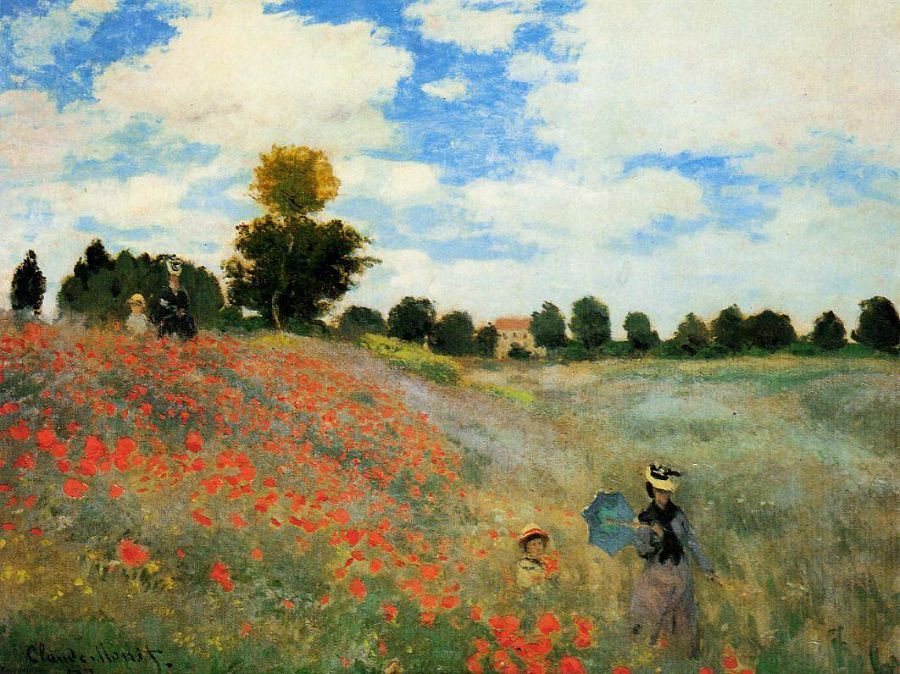
Monet claimed he was not one to ‘theorise’ in his paintings but in an interview hewas quoted as saying “primary colours look brightest when they are brought into contrast with their complementaries”, is awareness of the laws of simultaneous contrasts of colour can be seen in ‘Poppies at Argenteuil, 1873’ in which he took the opportunity to place spots of pure read against the more dominant green.

Claude Monet, Poppies at Argenteuil, 1873

Claude Monet, Poppies at Argenteuil, 1873

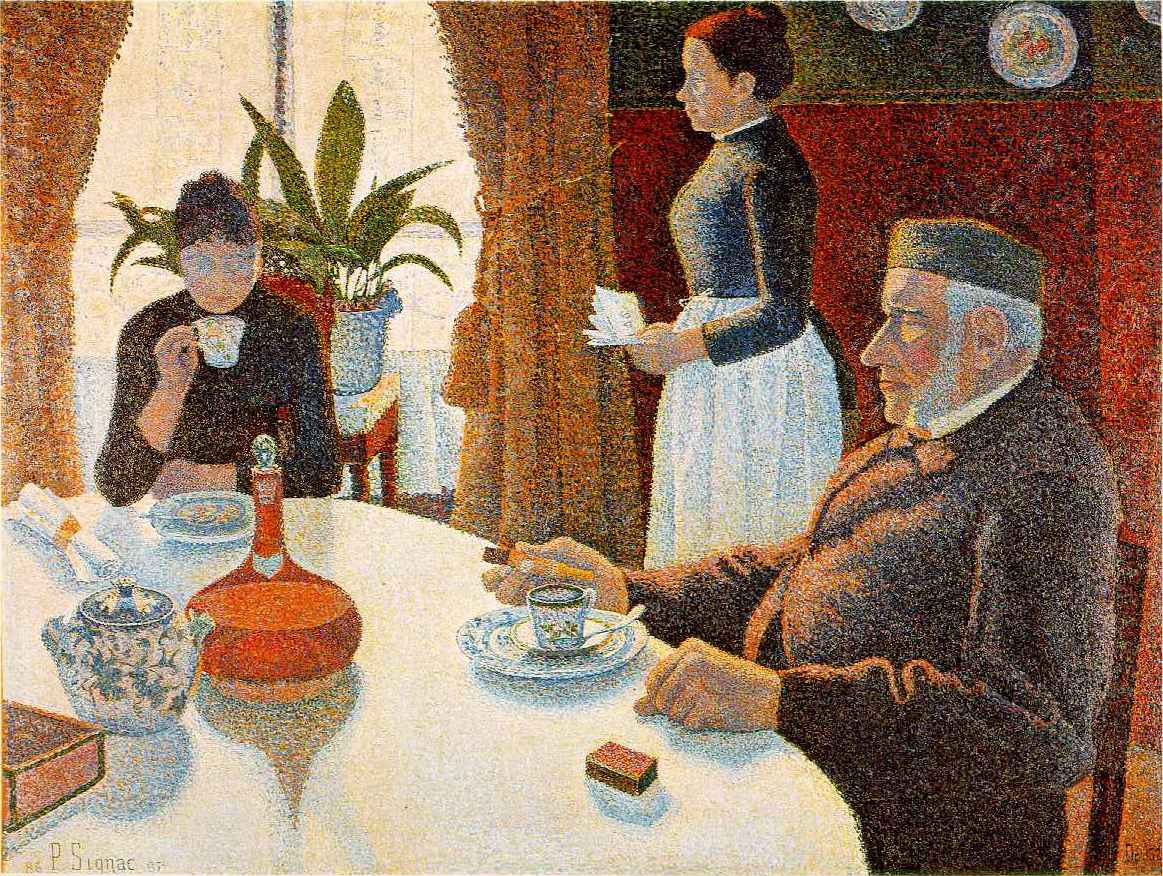
Unlike the impressionists who claimed they weren’t colour theorists the neo-impressionists from the 1880s onward realised how much of an important role colour science played in their paintings. Artist and theoretician of neo-impressionist movement, Paul Signac visited Chevreul in 1884, and in 1885 returned to visit Chevreul’s assistant at Goeblin’s, Emile David, who he is thought to have visited with George Seurat. as like other neo-impressionist painters who have acknowledged Chevreul, Seurat himself mentioned Chevreul amongst his sources.

Both Signac and Seurat As for Signac, ‘optical mixture’ where instead of being mixed on the pallete, dots of complementary colours are interposed directly on the canvas in order to applied the principle of frequently interposed small dots of complementary colours in order to increase
the luminance in their paintings, these dots of colour are meant to be fused by the eye when seen from a distance which produces a third colour, different from the
two juxtaposed hues.

Paul Signac, The Breakfast, 1886-87

Paul Signac, The Breakfast, 1886-87

Van Gogh got aquainted with ‘the theory of simultaneous contrast’ through art critic, Charles Blanc’s interpretation of Chevreul’s colour theories. He was so enthusiastic after reading Blanc that he copied out a passage of his book in a letter to his brother.

However because of van Gogh’s supposed madness, his use of colour in his paintings has been analysed by doctors rather than by art historians and he was diagnosed as having ‘xanthopsia’ or yellow vision due to his apparent overuse of yellow, but when his paintings are examined carefully the yellow never stands alone and his always along other colours usually against violet, it’s complimentary colour.

Vincent van Gogh, The Sower, 1888

Vincent van Gogh, The Sower, 1888


Vincent van Gogh, Vase with Irises against a Yellow background

Vincent van Gogh, Vase with Irises against a Yellow background

Click to access Chevreuls%20Law%20F1%20web%20good.pdf

Part 1 – Introduction to Painting, Assignment 1

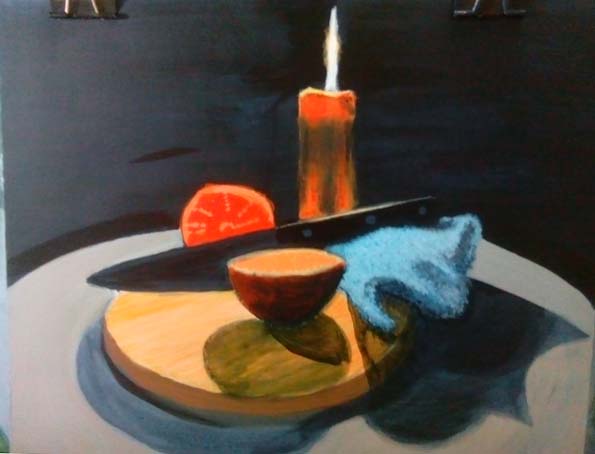
Finished Piece with brown tinted Background

Finished Piece with brown tinted Background

The Subject

It wasn’t difficult to think of a subject to paint for this assignment, I really enjoyed painting on the dark ground for the last tonal study and I managed to pull the chiaroscuro effects off quite well, I really needed to see if I could do it again with different subjects. Maybe in the style of Caravaggio.

Finished Tonal Study

Tonal Study on a dark ground

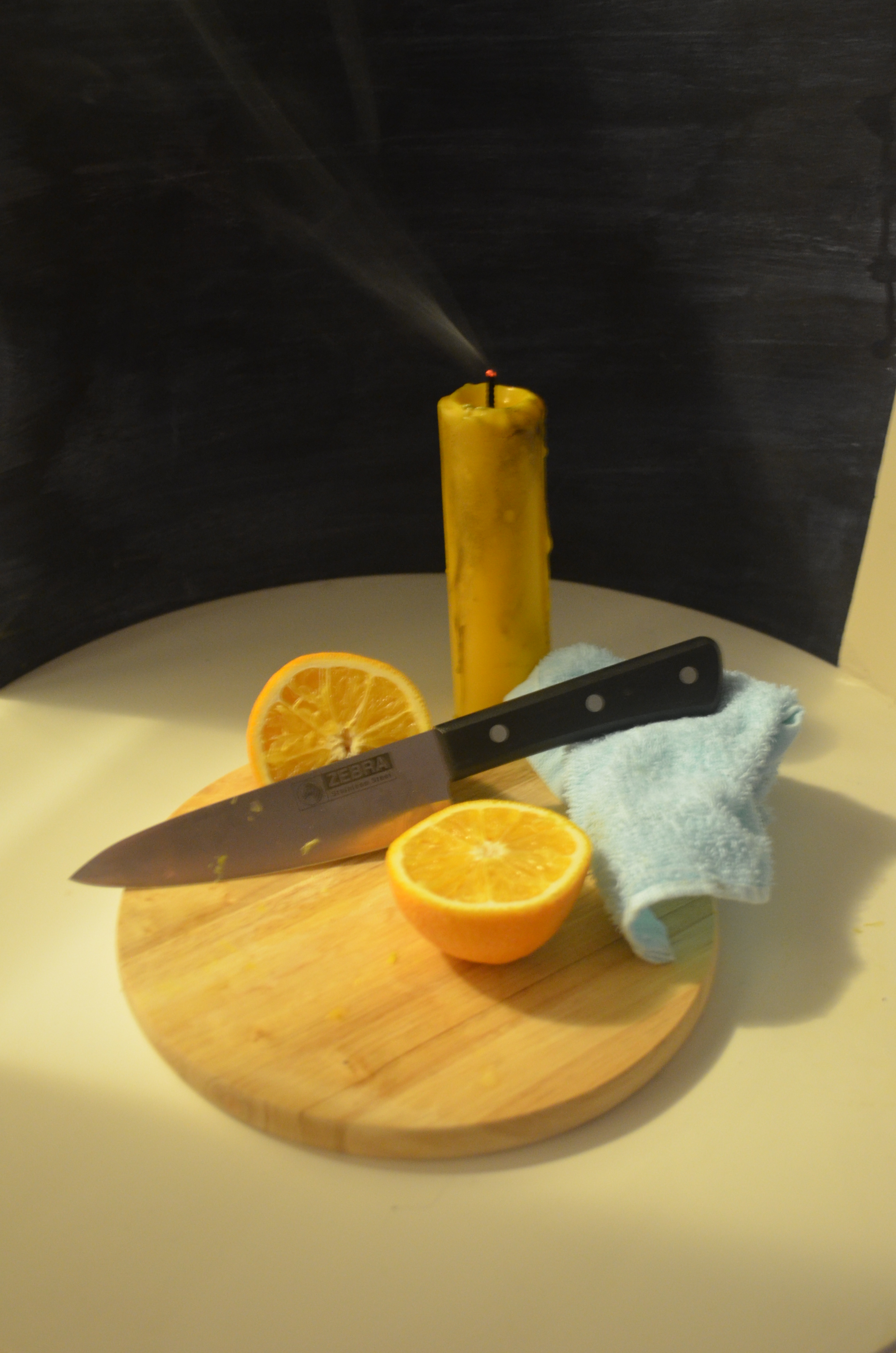
While working through the drawing 1 course, one or more students had drawn still life’s that included a chopping board and a knife, this gave me a great idea, I had used an orange in the last two tonal studies, Tonal study on a white ground and Tonal study on a dark ground  so why not finish this part of the course with a still life of that orange been sliced in half on a cutting board. It would not just be the last in a series of paintings but it would be symbolic of the end of part 1.


chosen subjects

chosen subjects

I also wanted to include the candle that I had used to light the second tonal study in my assignment piece so I was only lacking two subjects a large knife and a chopping board, I tried getting a natural chopping board, I usually see people selling them on the streets but when it came to buying 1 they were no where insight so a machined board and carving knife from Tesco had to do. Because i wanted to use as much as the dark ground as i possibly could I chose a black handled knife with three rivets.

After cutting the candle in half to bring it lower to the other objects, it was apparent that I needed an extra object, a small towel, to prop up the knife.

Preliminary Studies

Materials used:

  • Canson A4 sketchbook
  • Derwent Charcoal Pencil
  • Compressed Charcoal
  • Graphite stick
  • Putty rubber
First study - charcoal pencil sketch with notes

First study in Charcoal pencil


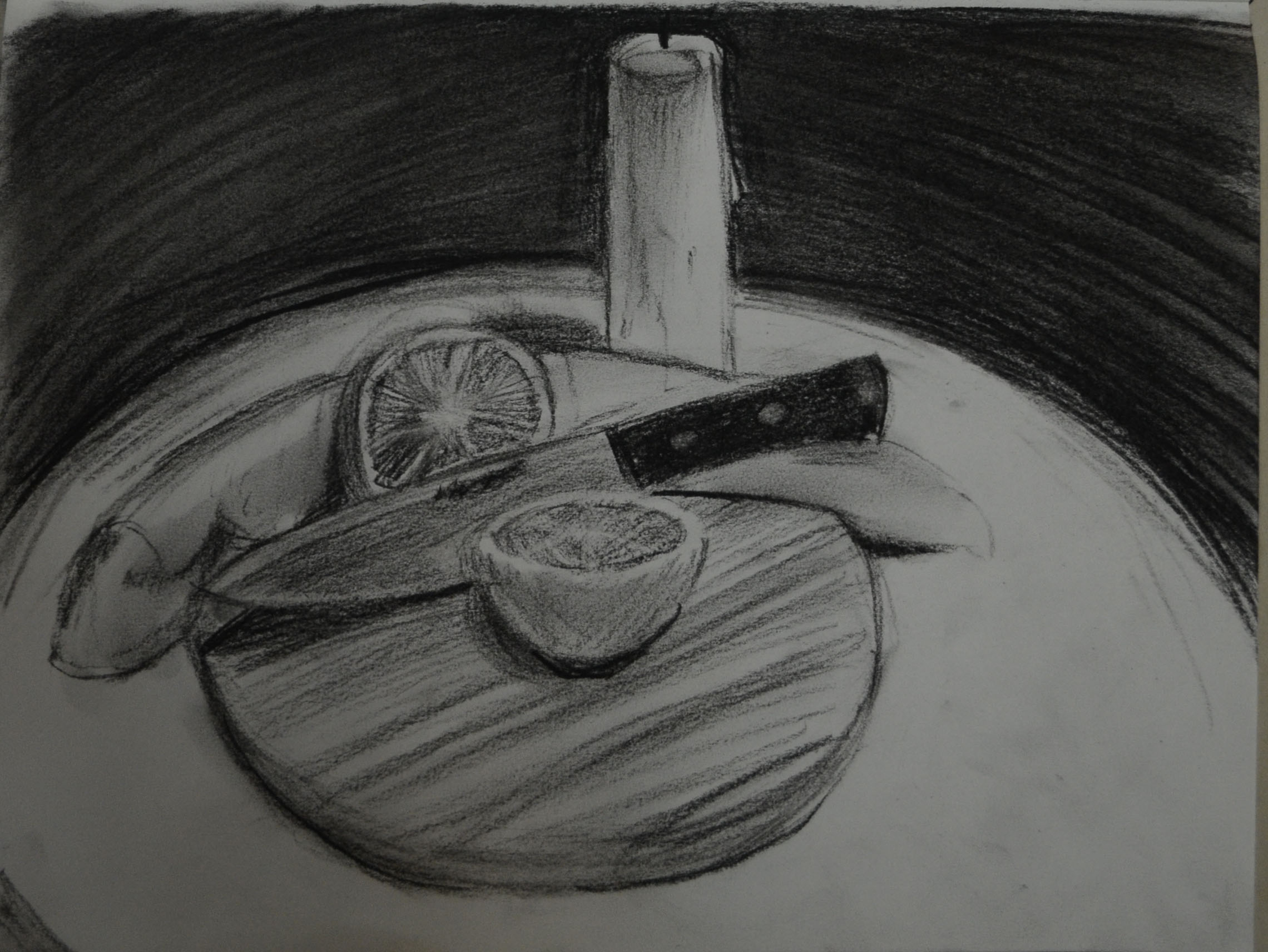
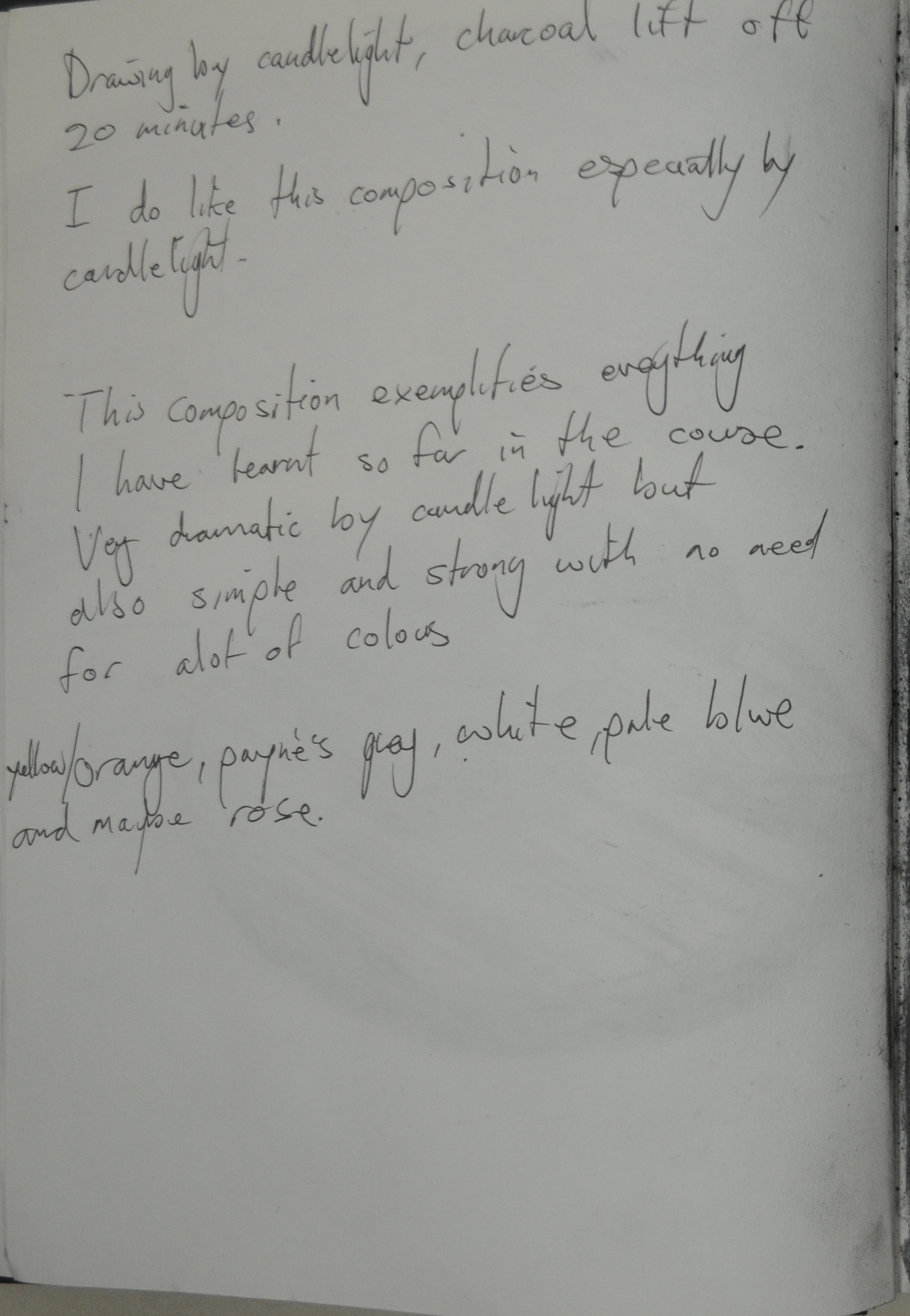
The first study I did was of all the objects together but with the orange in 1 piece, I did the first studies with the light on and candle unlit but took notes of how the composition looked in electric light and daylight. It was pretty hard to choose as both lighting looked good and the compositions looked great from all angles.

The tonal studies helped me to group the objects and specific parts of the objects into groups that shared the same colour properties and tonal properties e.g. the orange, the cutting board and the candle shared similar tones and colour, the handle and the background and the towel, blade and rivets; in candlelight the groups changed.

2nd charcoal pencil sketch notes

2nd charcoal pencil sketch notes

2nd charcoal pencil sketch

2nd charcoal pencil sketch


After the first study I decided to go ahead, be brave and cut the orange, the composition then went from a simple composition with 4 objects to a more technical composition with five. It also created more groups with the light off the candle and orange on its side sharing similar colour and tonal properties and the board and other half of the orange having similar properties.

In the third study I decided to omit the towel but there wasn’t enough contrast in the composition for my liking plus i didn’t know if the knife would stay up for long. The blue towel was a nice contrast between the yellows, orange and beige and other natural tones of the cutting board.

3rd Study - Notes

3rd Study – Notes

3rd Study in graphite stick and charcoal pencil

3rd Study in graphite stick and charcoal pencil


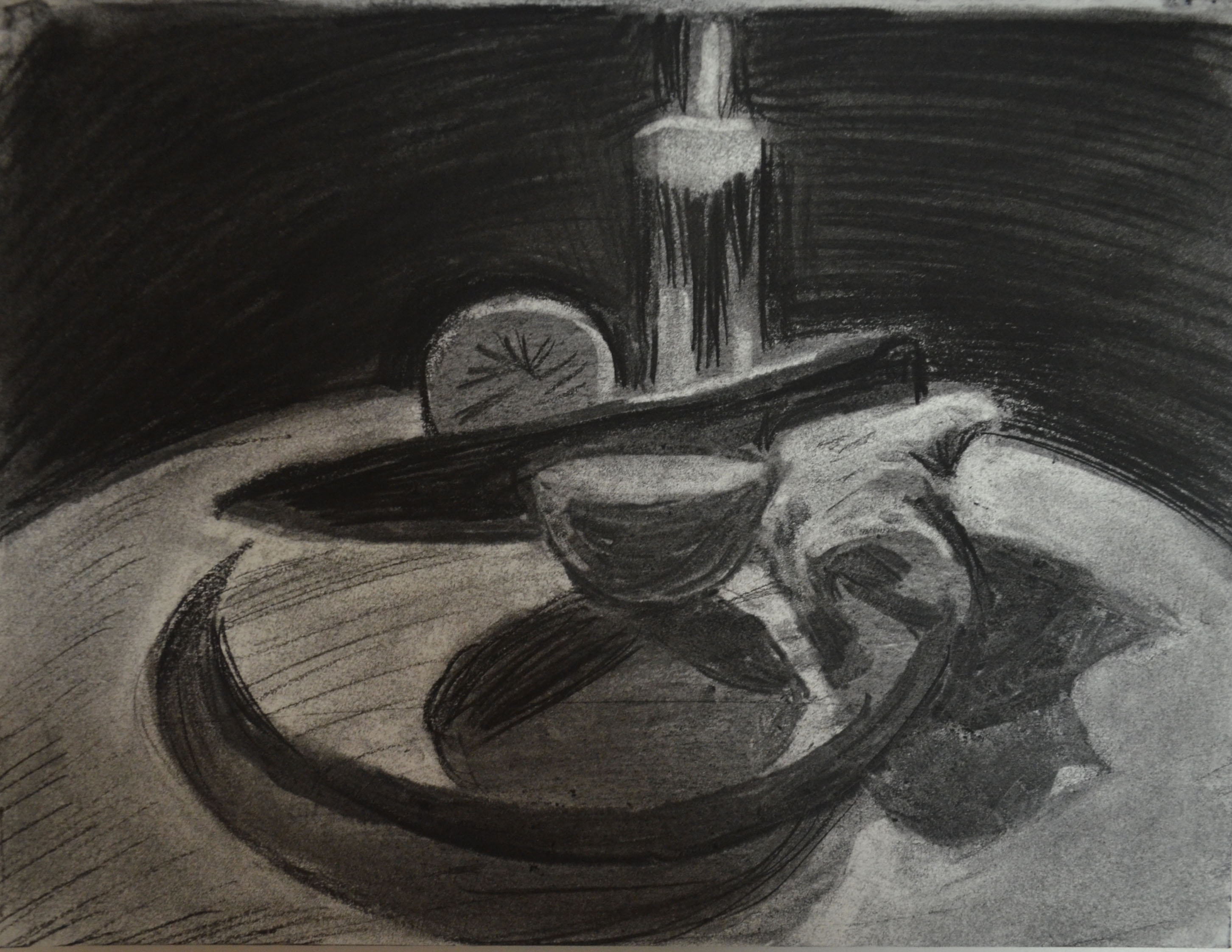
After making three studies with the light on I decided to try something different, as I would be painting this most likely with the light on to try and to further experimentation with chiaroscuro which was what I had initially intended to do I would make the next sketch in candlelight. This gave me an idea to make the next drawing using an entirely different technique. Lifting off the charcoal rather than drawing with it.


4th Study Charcoal lift off

4th Study Charcoal lift off

4th Study - notes

4th Study – notes


This time I drew from a different angle with my head closer to the level of the table, this added to a more dramatic effect and the knife rather than reflecting the orange and light like I had tried for in the first few sketches was completely dark with only a slight tonal difference between the handle and the blade; this meant that I could use more of the dark ground and could ‘model light’ defining the knife with a few simple details and highlights, this appealed to me. The shadow cast by the orange in front of the knife was also very appealing it meant that I could create a good sense of depth in the painting. I just wasn’t sure how well I would be able to paint the candle, flame and the light the glow around it.

Colour study

Materials used:

  • Canson watercolour paper painted with a dark wash
  • Oil pastels
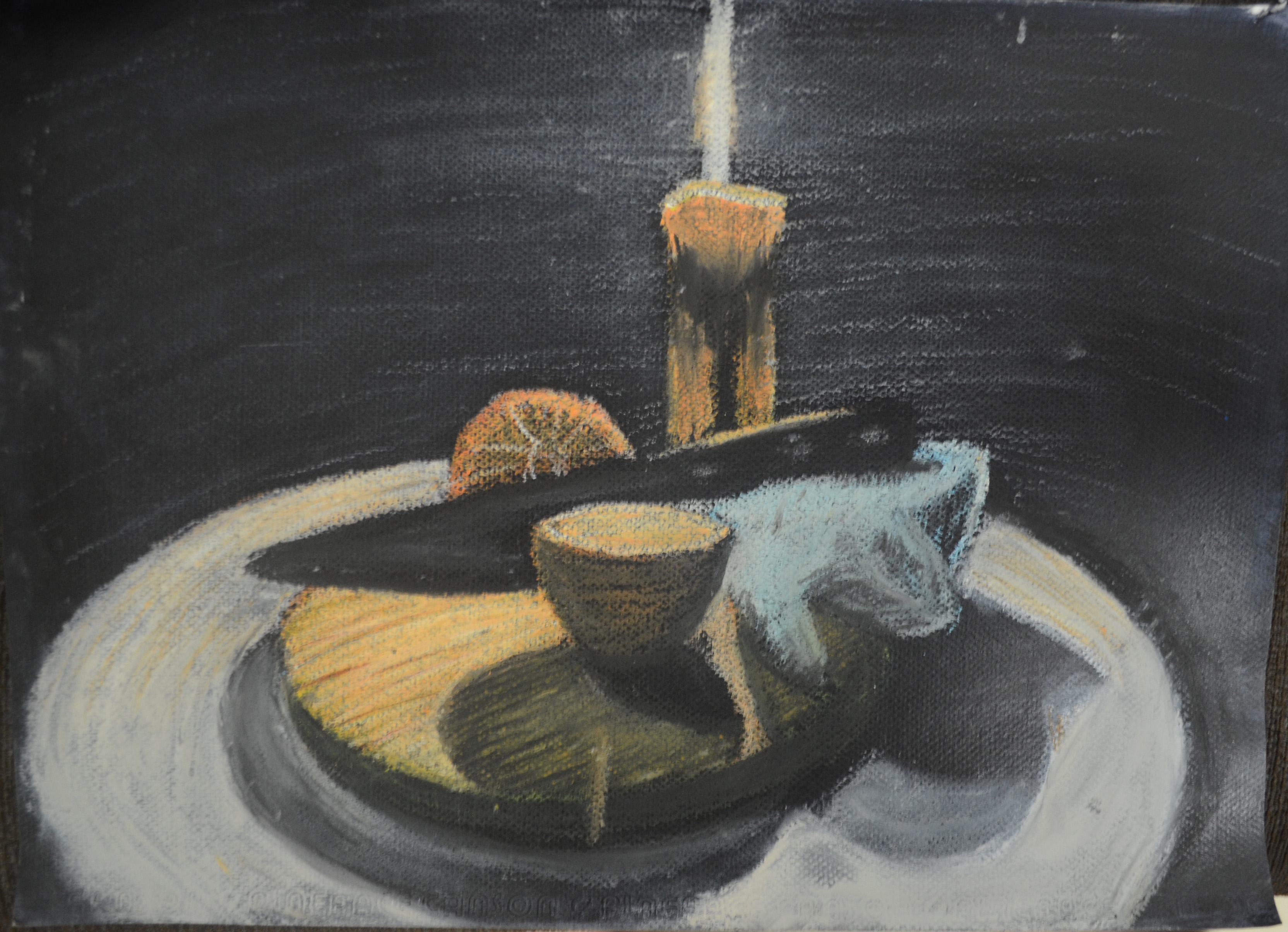
5 Colour Study in Oil Pastel

5 Colour Study in Oil Pastel

At this stage it was a toss up between the mediums I felt comfortable with for the finished assignment piece, either acrylic or oil pastel and so decided to a colour study in oil pastel on an A3 sheet of watercolour paper prepared with an imprimatura of Payne’s grey. The colour study helped me to determine which colours I would use for the final drawing, these were:

  • titanium white
  • payne’s grey
  • light blue
  • cadmium orange
  • pearl orange
  • chromium green
  • yellow ochre
  • lemon yellow
  • burnt umber

Finished Piece

materials used:

  • Canson A2 Acrylic paper 15 x 18 inch
  • Acrylic paint (colours as above)
  • Paint brushes – medium wide, filbert (2 sizes), round pointed (2 sizes), angular flat
Drawing shapes on dark background with white conte

Drawing shapes on dark background with white conte

After preparing the acrylic paper with a dark ground (Payne’s grey I drew in the shapes with a white conte stick using my paint brush to help as a measuring tool. The shapes weren’t precise but that wasn’t too important at this stage just as long as I had something to work from. As it turned out the shapes were well out and did need a lot of editing while I was painting.

From there I painted the highlights on the top of the knife so that I knew it was at the correct angle and painted in the candle and both halves of the orange in cadmium  orange (highlights in yellow), I could have done this differently. The best way would have been to model light by building the colour gradually  on top of the dark ground rather than blocking in the shapes then painting the shadows over the colour like I did.

Half way point

Half way point

From there I painted the chopping block with the same cadmium orange but used a lot more white and the darker parts in yellow ochre. The towel was painted in different mixes of light blue, Payne’s grey and white using a stippling effect with a small flat brush to create texture. Shadows on the board and orange were painted in a mix of Payne’s grey and chromium green in thin glazes. while the shadows on the table were painted in thin glazes of white and payne’s grey over the top of the dark ground.

It got interesting round about the half way point with objects painted but still very rough and very bright I had to think about the techniques and colours that I would use to tone down the painting as well as give the painting a dramatic feel as seen in Caravaggio’s paintings. It was here that I stopped looking at the still life composition and any photos I had taken just glimpsing from time to time, as painting as I saw it had negative effects, when I came to take a photo the colours were to bright or didn’t look right so I started to paint how I felt it should look. Burnt umber, Payne’s grey, pearl orange, yellow ochre and white became the key players.

Finished Piece for assignment 1

Finished Piece for assignment 1 – Before Burnt Umber background wash

Very thin washes of Payne’s grey helped me to tone down the orange of the candle and upright orange slice while yellow and white followed by a very thin glaze of the grey were used to make the orange pointing upwards look more like an orange. I used a scrumbling technique with very thin seperate layers of white, pearl orange and burnt umber to make the blue of the towel more subtle.

The board was probably the most challenging it was just too bright and I knew that it was the board that would make the painting if the board looked bad the rest of the picture would too. The brief said not to get wrapped up in any one object and too look at the painting as a whole but the board was a major part of the painting and so it needed to be right. I added thin layers of burnt umber over the orange mix and then used thicker layers to paint in the grain. I painted over the shadow with a layer close to the original orange/white mix, then a layer of green followed by washes of burnt umber and Payne’s grey. This was a vast improvement.

While sat here writing this entry and thinking that the painting is finished I have started looking at the photos I have been posting to this log again and realising something is not quite right. I have stayed as close to the original tone of the background as possible. The dark painted paper that I used for a background reflected light from the candle and that’s what I have tried to show here and I think that’s where I’ve gone wrong. Rather than depicting any background at all I should be depicting an absence of one to allow the viewer to make up their own mind to where the painting is set, whether it’s in a small room, large room or even a cave.

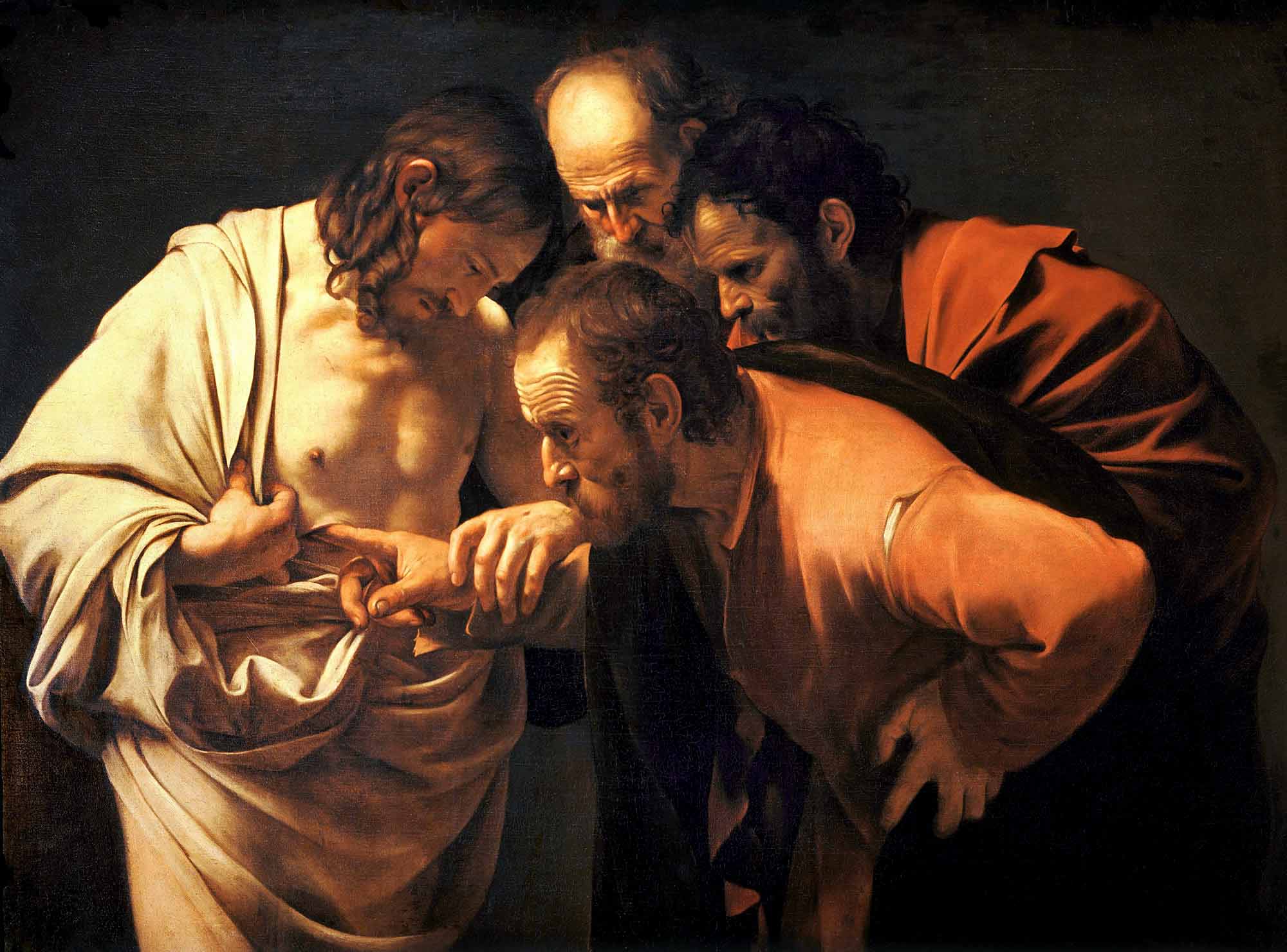
Caravaggio - Doubting Thomas

Caravaggio – Doubting Thomas

Caravaggio seems to use a brown tint in his background which allows the viewer to do this and so I have painted over the Payne’s grey background with a glaze of burnt umber and payne’s grey leaving the original colour around the candle to hopefully make it look like it is emitting light. Feedback from my tutor will hopefully let me know if I have been successful or not.


Things I am pleased with:

Method and technique

  • I managed to use most of the techniques I have learnt from starting the course plus a bunch of techniques from the drawing 1 course.
  • I didn’t rely on my eyes as I have done with most other exercises and assignments instead I went with how I felt it should look. Maybe this is the start of me developing a personal voice.
  • I particularly liked the way an oil pastel study gave me a good insight into which colours I would be using for acrylics. I didn’t question this and I’m glad because it worked.
  • Using washes and glazes in the painting was very interesting, years ago i would have repainted the subject if it was too bright, understanding how to use glazes has given me a push in the right direction.

The final piece:

  • I am very happy with the overall painting especially at this stage, it does have which I hoped it would a dramatic feel to it, even if it’s just a knife cutting an orange.
  •  I feel that the painting does show influences of the artists I researched for the Chiaroscuro particularly Caravaggio.
  • There are parts of the painting that I do feel exemplify the chiaroscuro technique really well particularly the knife handle resting on the blue towel. This is probably the best part of the picture.
  • The shadows particularly from the orange help to create a nice depth to the painting.
  • The texture of the hand towel could not be improved on to me this is perfect.
  • The brown tinted background – This really finishes the painting nicely. I may have been able to improve on the glow around the flame but I didn’t want it to strong but for now the tint of burnt umber helps to create a halo around the grey.

Things I am not happy with:

Method and Technique

  • For the life in me I couldn’t get the wax under the flame of the candle like it did.

The final piece

  • I couldn’t get the wax under the flame to glow like it did this would have probably  really improved the look of the painting.
  • The colours are a bit dull but any brighter didn’t look right at all so they had to be toned down.
  • The knife blade is out of shape but I couldn’t keep messing around with it for the objects around it.
  • Not sure if the blade looks twisted or not from the handle.
  • Too me the candle looks flat. I’m not sure what technique I should use to improve on this.
  • Not sure if the shadows of the board should be darker. I had a problem with the mix of greys and adding colour tints to them.


Working on Different Coloured Grounds 2 – Tonal Study on a Dark Ground

Finished Tonal Study

Finished Tonal Study

As briefed I prepared a dark ground with a dark wash of payne’s grey, this I did on A3 size watercolour paper. I had gone larger with the first painting but this time I stuck to the guidelines in the last exercise, Tonal study on a white ground, having now plucked up a bit of courage and got more confident with the brushes.

Chosen Composition

Chosen Composition

As in the last exercise I used acrylic paint for both the ‘imprimatura’ and the actual painting, I still haven’t plucked up enough confidence to use oils, I think this is because I am very worried about the drying time in my small condominium.

Having just researched ‘chiaroscuro‘ in the last research point, the works of Joseph Wight of Derby and the candlelit studies of Rembrandt really appealed to me and so I chose to do this study by candle light (from a large Buddhist candle that I bought for drawing 1) rather than it being lit from the side with the bendy lamp that I have used in the past.

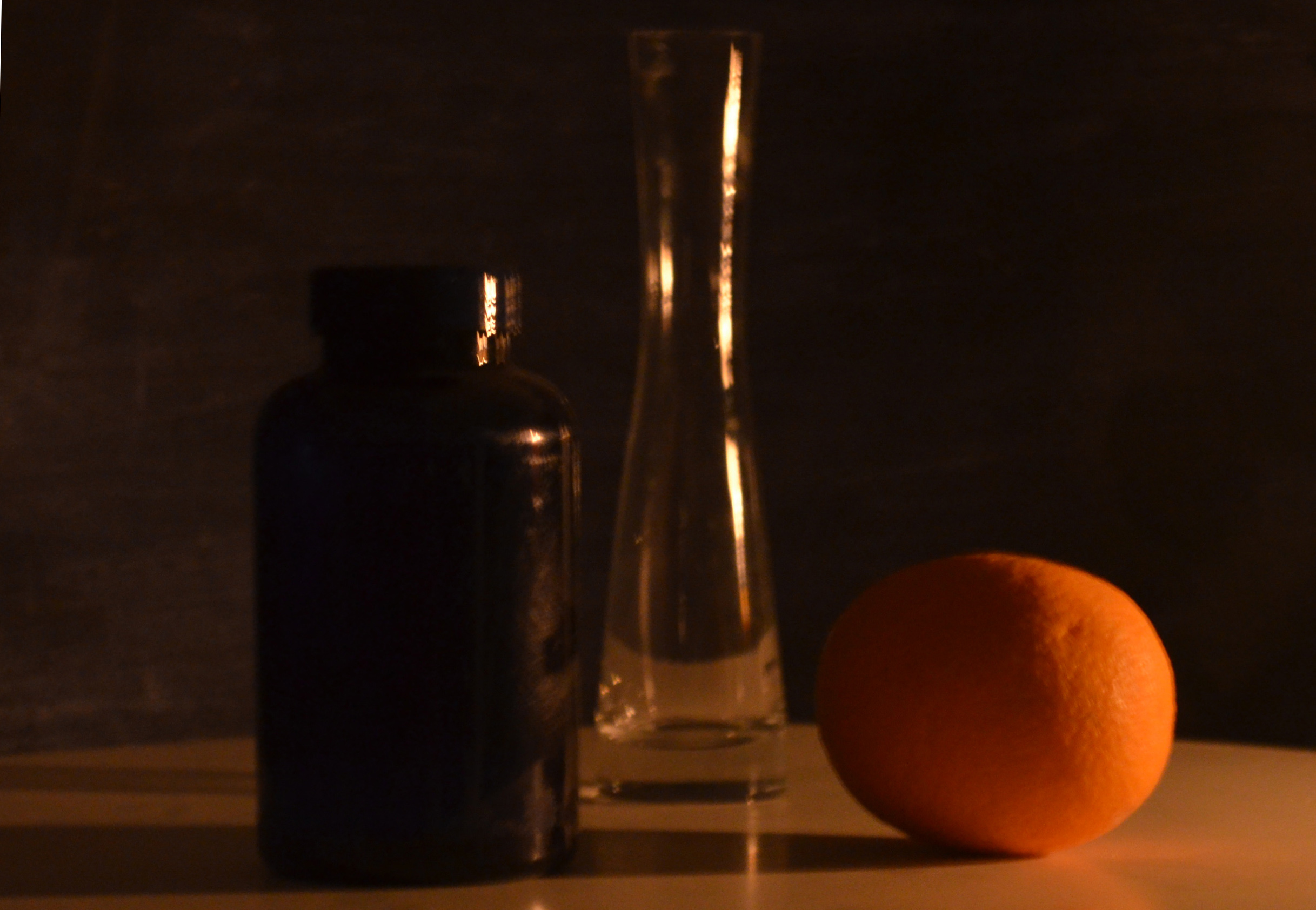
Because I wanted to employ chiaroscuro effects in this painting the best way to do this was to create a composition that reflected the light best, so I played around with the three subjects that I used for the last exercise until I found a composition that worked well, reflecting light in a dramatic way.

Materials Used for this painting

  • Canson Watercolour Paper (A3)
  • Acryic Paint: Titanium White, Payne’s Grey, Chromium Oxide Green
  • Brushes: Medium Wide (synthetic), Fan, Pointed Round (synthetic), Flat (synthetic) Detail Flat (hog’s bristle) 
  • An old bank card
Empty Calcium Container

Empty Calcium Container

I sat facing the objects with the bendy lamp behind me switching it on as I needed as it was quite difficult to paint the objects in the dark.

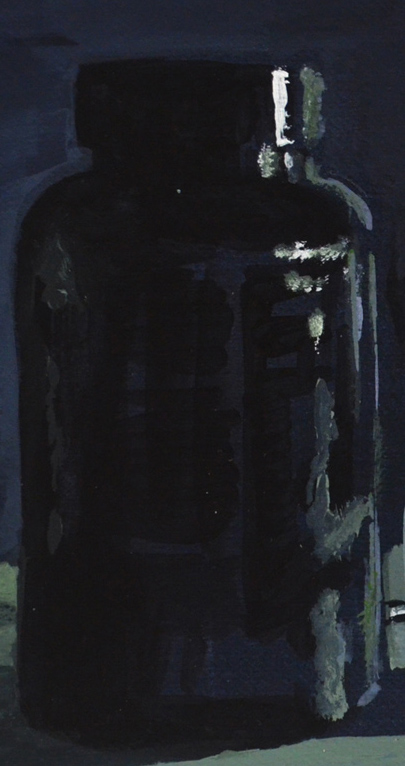
For the first object, the empty calcium container I used payne’s grey (undiluted) for the darker shadows leaving the colour of the ground showing through in places for the reflections. I then painted the lighter reflections in a diluted mix of payne’s grey, white and green with highlights in titanium white which I later dulled down in a very dilute mix of green and grey. I then painted a thin line of reflection on the edge of the container by applying paint with an old bank card.

Reflection inside jar

Reflection inside jar

From there I painted the broad band of light reflected inside the vase which was empty for this painting rather than filled with coffee as it was for the last exercise. The reason for painting this part of the jar was so that I knew how far the orange needed to be as i would be painting that next and coming back to the jar as this would be the most difficult part of the painting.

Painting the orange helped me to decide on the tones I would be using for the rest of the painting as up until now I wasn’t sure if I should be putting more of the green in the mixes but as I

Orange

Orange

started painting the orange I saw that the balance of green grey and white was really nice and so I continued as I was. There is a white line on the bottom of the orange that I can see now as I am typing this that I will have to blend in before it’s finished.

After completing the orange I went back to completing the jar which took a create deal of effort  as I messed up with the reflections and highlights a couple of times and had to paint in and around it and trying to find the right mix of Payne’s grey and white was a difficult task.

Completed jar

Completed jar

I do realize that the aim of these exercises is to focus on tone rather than precision but I do like the objects to be the right shape and if the shape is out I do tend to correct them and with the jar it took some effort.

I think for my first attempt at using (if that’s the correct term) chiaroscuro effects I did quite well. The painting took me less time to complete than the Tonal study on a white ground as i was modeling light rather than painting whole objects, apart from the orange which I actually thought I could leave some of the ground coming through for the darker shadows.

On modeling light: Again for a first attempt I think I did quite well, there is still a lot of the ground showing through so I did use the ground to the best of my ability at this point, painting the reflections and shadows helped me to create the shape of the objects as to just painting them and adding the reflections later.

Comparison: Looking at the two studies I have to say that I prefer this one, it was not only easier and quicker but I think it does look much better and composition as a much more dramatic appearance.

Tonal Study on a White Ground

Tonal Study on a White Ground

Finished Tonal Study

Finished Tonal Study


Technical Difficulties: 

  • Painting in low light: This was extremely awkward and I had to keep turning the lamp behind me on and off.
  • Matching up paint with the coloured ground: There were times when I had to correct mistakes by painting on the ground, by doing this I had to match up the tones, I still haven’t perfected this but I realised I had to go with a very dilute mix and then thicken it up to match up the colours.
  • Painting very thin lines of light/highlights: There were times when I used the edge of a bank card, there were times when I went to thick and then thinned them down by painting against them with a darker colour.
  • Getting the colour mixes right: I used a second sheet of the same dark wash to try out the mixes if I was unsure.

Research Point 2 – Chiaroscuro

Caravaggio - John the Baptist

Caravaggio – John the Baptist

‘The term chiaroscuro (chiaro meaning light, scuro meaning dark) originated in the Renaissance when it referred to a technique .of drawing on coloured paper by building light tones with gouache and working down to dark tones with ink. It later came to refer to modeling of light in paintings, drawings and prints. The extreme contrast between dark and light areas allowed subtle graduations of tone to create illusions of volume, most notably that of the human form. Chiaroscuro became a common composition device in religious paintings such as those of Caravaggio.

‘Explore the works of some of the artists whose work exemplifies chiaroscuro effects such as Tintoretto, Caravaggio and Rubens. Look at the candlelit studies of some of the northern European artists, most especially Rembrandt and Joseph Wright of Derby. (Remember that until relatively recent, life was lived in pools of candlelight or firelight after the sun went down.) Make notes in your learning log.’
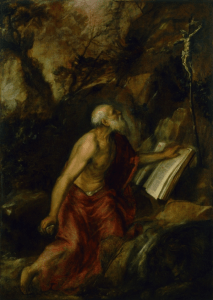
Titian Saint Jerome in the Desert

Titian Saint Jerome in the Desert

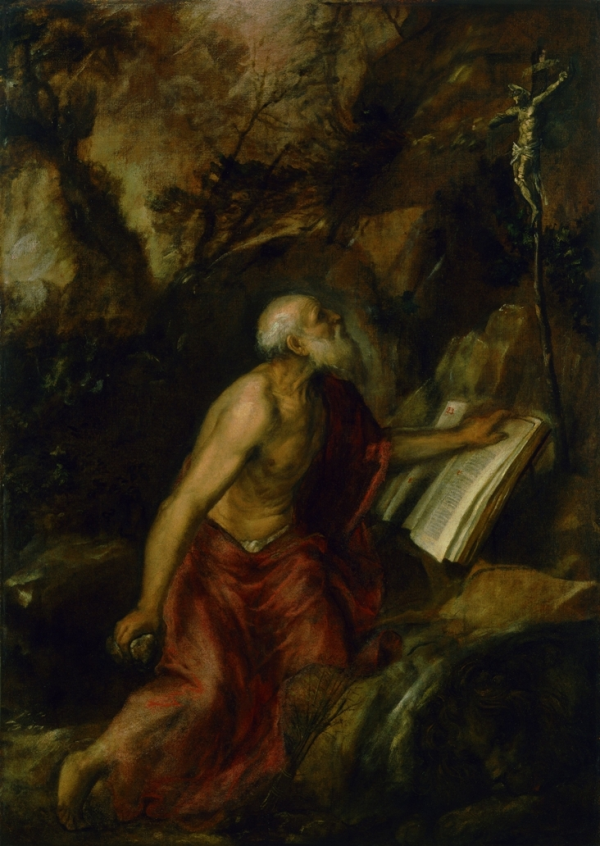
Towards the end of the 1500’s, with the new religious appreciations due to the Catholic Reformation, night scenes depicting the life and Passion of Christ became increasingly popular. The artist Titian embarked on a new technique which involved the disintegration of matter in light, particularly in night settings. He would continue to explore the dissolution of light through matter until the end of his days. The Next generation of artists would take over and perfect these dramatic effects of light and colour.

Night scenes would later become known as Nocturnes (a phrase coined by James Abbott McNeill Whistler). It describes a painting style that depicts reminiscent of the night  or subjects as they appear in a veil of light, candlelight, twilight, or in the absence of direct light.
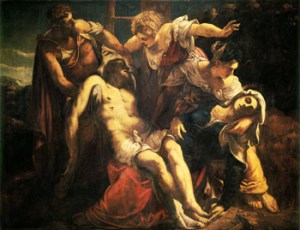
Tintoretto - Lamentation over the Dead Chris

Tintoretto – Lamentation over the Dead Christ

Jacopo Tintoretto

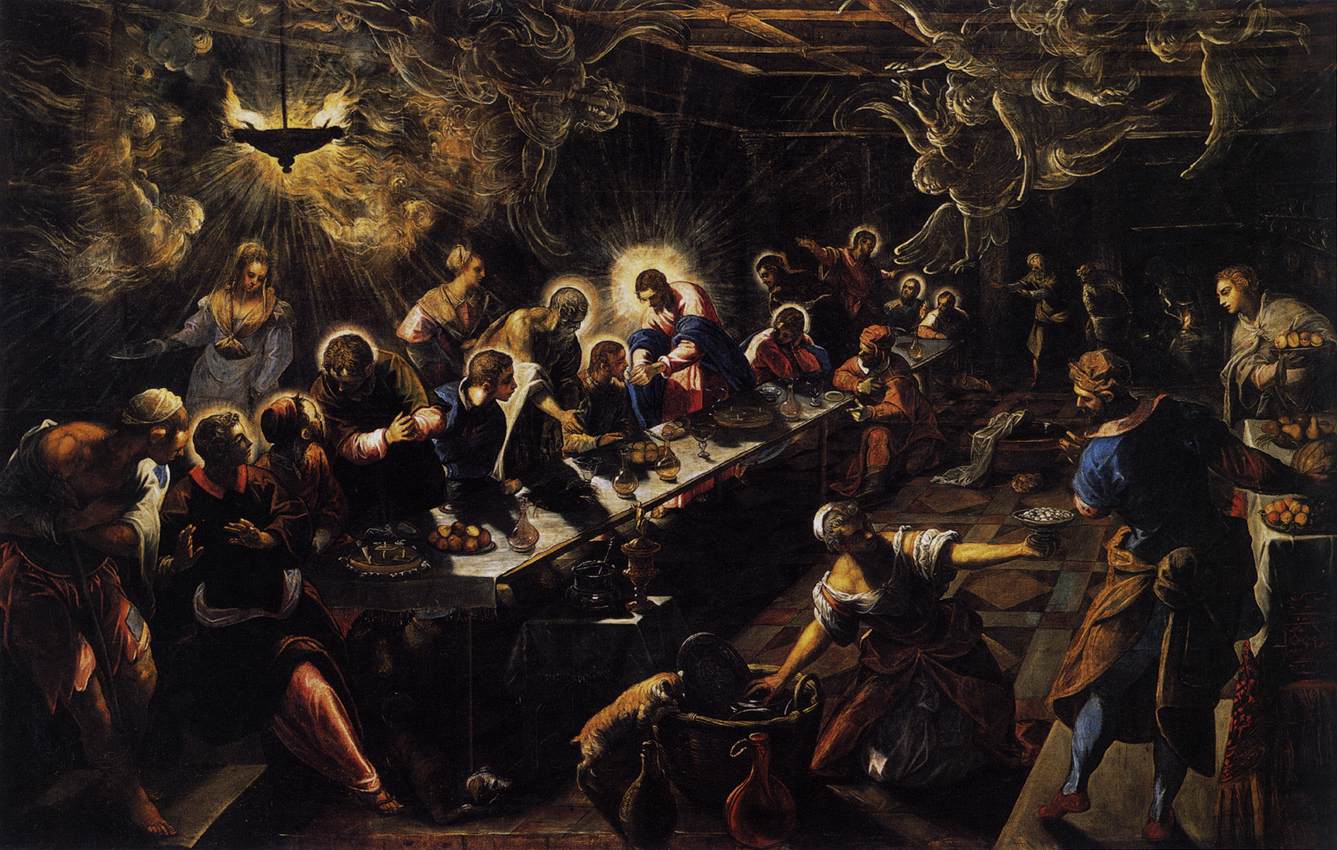
Throughout his long career Jacopo Tintoretto dramatised his nocturnes by drenching them in heavenly lighting, with colours distorted by bold contrasts of light. These lively effects of lighting added drama to his stunning compositions.

Jacopo Tintoretto - The last Supper

Jacopo Tintoretto – The last Supper

Examples of this ‘supernatural lighting’ can be seen in both the Lamentation over the Dead Christ and the last supper where light is depicted coming from a source other than a natural one as to Titian’s St Jerome above which depicts natural moonlight.

Caravaggio

Before moving to Rome, Milanese painter Caravaggio trained as a painter in Milan under Simone Peterzano, a former student of Titian.

Caravaggio - Doubting Thomas

Caravaggio – Doubting Thomas

In Rome the Catholic church were in need of a stylish replacement to Mannerism in religious art, a move that they thought would help counter the threat of Protestantism (the counter-reformation), and so there was a demand for paintings to fill the many new churches and palatial buildings being built there.

Caravaggio revolutionized chiaroscuro with a radical form of naturalism combining close physical observations with a dramatic, somewhat theatrical, use of chiaroscuro this came to be known as ‘tenebrism’.

Caravaggio - Saint Jerome Writing

Caravaggio – Saint Jerome Writing

Looking at the paintings of the three artists above you can see the evolution of nocturnes and of course chiaroscuro as a major technique in night paintings. From works of Titian that used the background as an important part of the painting with figures whose forms didn’t wholly employ the technique that it would later become; to the paintings of Caravaggio who had pretty much perfected the technique, at least to where he need to be depicting up-close three dimensional compositions with a clear message that appear to almost leave the canvas.

Peter Paul Rubens

If the paintings of Caravaggio were a Drama then the paintings of  Flemish Baroque painter, Rubens would be a musical. Originally from Cologne in Germany, he was as a catholic by his mother in Antwerp, Belgium.

Peter Paul Rubens - The Fall of Phaeton

Peter Paul Rubens – The Fall of Phaeton

His paintings featured religious scenes in complicated and very dramatic compositions. Rubens became one of the leading voices for the Counter-Reformation style of painting and standing behind what he had worked so hard to ‘promote’ he stated, “My passion comes from the heavens, not from earthly musings”.

It is clear from his paintings that he was a man of faith, something was clearly moving him through these paintings, if not just belief.
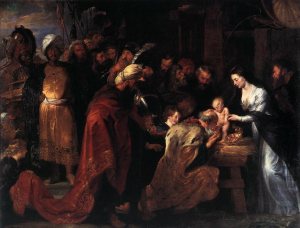
Peter Paul Rubens - Adoration of the Magi

Peter Paul Rubens – Adoration of the Magi

Where Caravaggio painted close-up dramatic scenes of a biblical theme with detailed expressions and drapery Rubens’ painted religious scenes in action, depicting flowing drapery and strong movement in his figures, with complicated compositions with several main figures and even horses.

In a lot Rubens paintings it is very clear to me that he started on a dark background particularly in the two paintings that I chose here, ‘Adoration of the Magi’ and

Peter Paul Rubens - Night Scene

Peter Paul Rubens – Night Scene

‘Night Scene’ but then again I now know what I am looking for, to others that don’t,  they see every bit of the composition as if everything in the painting was completed in detail, what the eye doesn’t see, the brain fills in.

 Rembrandt Harmenszoon van Rijn (Rembrandt)

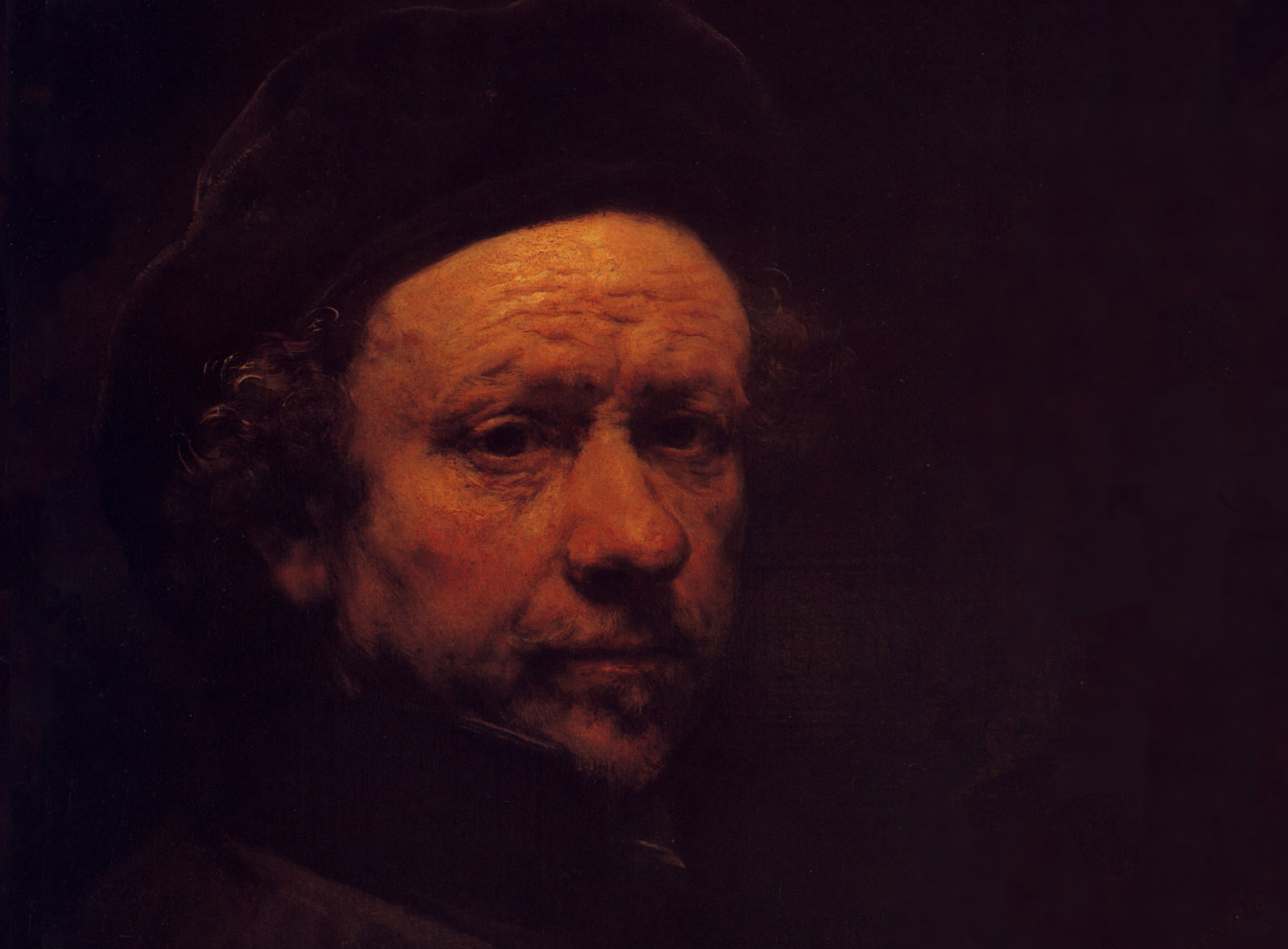
For the best examples of chiaroscuro in Rembrandt’s paintings one needs to look no further than his self-portraits. Rembrandt created nearly one hundred self portraits in his lifetime. Of those one hundred self-portraits seven were drawings, thirty two were etchings and fifty were paintings. Included in those were candelit studies, painting by candle light.
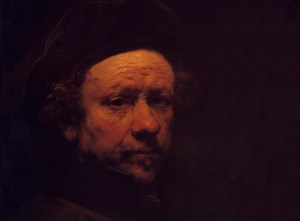
Rembrandt - Self portrait 1657

Rembrandt – Self portrait 1657

Rembrandt’s candlelit studies are great examples of the use of chiaroscuro, I looked at several of his self portraits the technique but ‘Self Portrait 1657’ was one that really stood out, the reasons for this being that you can see how the face and highlights in the hair and hat have been painted building up the light tones on the dark background. I can imagine him painting it, where he started and can even guess some of the brush techniques that he used.

Joseph Wight of Derby 

The artist Joseph Wright of Derby was unknown to me, as an artist that is but is name was famiiar and when I did a search fore information about the artist I came across the Joseph Wright college and it clicked.
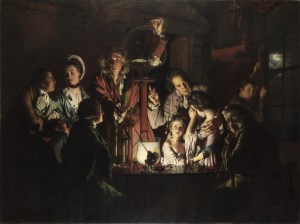
Joseph Wright of Deby - An Experiment on a Bird in an Air Pump

Joseph Wright of Deby – An Experiment on a Bird in an Air Pump

Wright is notable for his use of Chiaroscuro, and for his paintings of candle-lit subjects. His paintings of the birth of science out of alchemy, often based on the meetings of the Lunar Society, a group of very influential scientists and industrialists living in the English Midlands, are a significant record of the struggle of science against religious values in the period known as the Age of Enlightenment. – Wikipedia

Joseph Wright  did for the industrial revolution and science as Titian, Tintoretto and Caravaggio did for the counter-reformation, ‘using their own tool against them’ comes to mind. It’s ironic that using chiaroscuro effect was the best way he could describe the candlelit scenes of the ‘Age of Enlightenment’ when the chiaroscuro effect had been employed by so many earlier artists who had described religious scenes through their art. His style was very similar to Caravaggio but using more detailed, technical compositions and painting them from a distance. What makes his paintings different from earlier works however, his is exceptional use of shadows.

Bibliography:

http://mini-site.louvre.fr/venise/en/exhibition/holy_nights.html

http://www.wikipedia.com


Working on Different Coloured Grounds 1 – Tonal Study on a White Ground

The brief for this exercise:

Find a few simple objects that are ready to hand are  plain and un-patterned. A jug, vase and/or some fruit would be ideal. Place them so that they are lit from the side, either by natural light from a window or by lamplight.

Using a tonal drawing medium such as a soft pencil, pastel or charcoal, do some simple studies of your chosen objects in your sketchbook. Make several studies from different angles and then decide which viewpoint and angle you will use for your tonal painting.

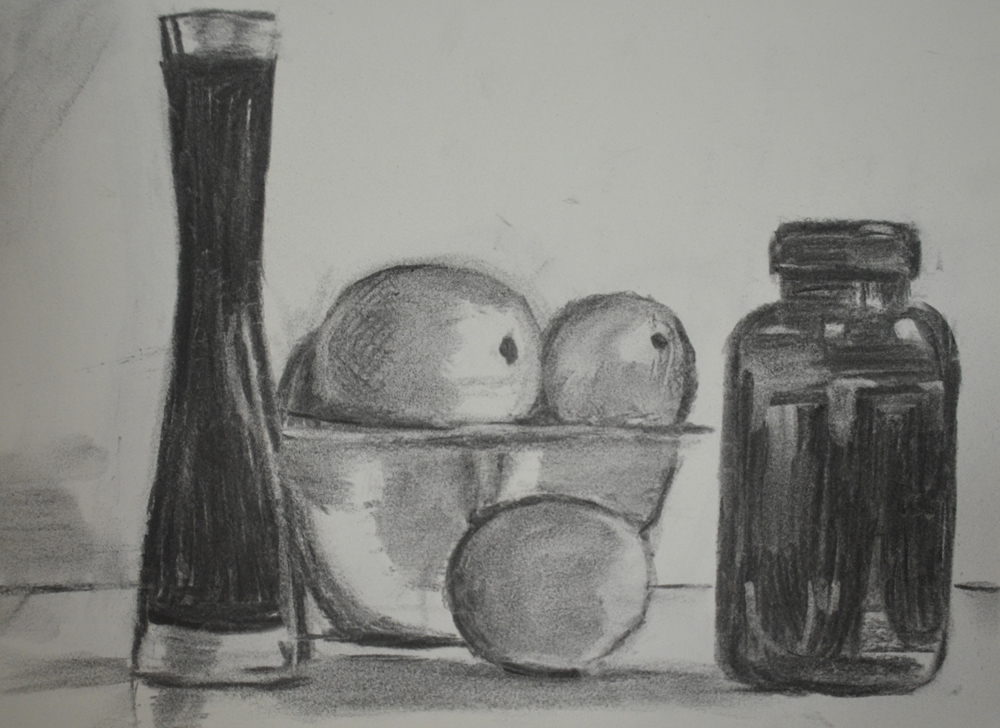
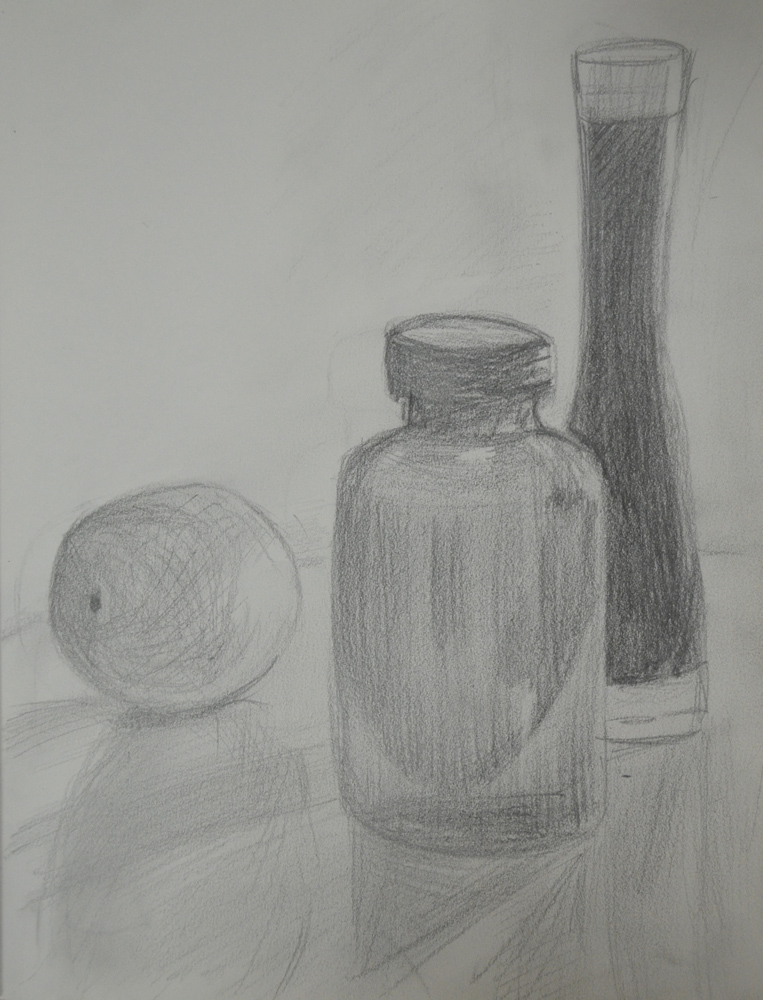
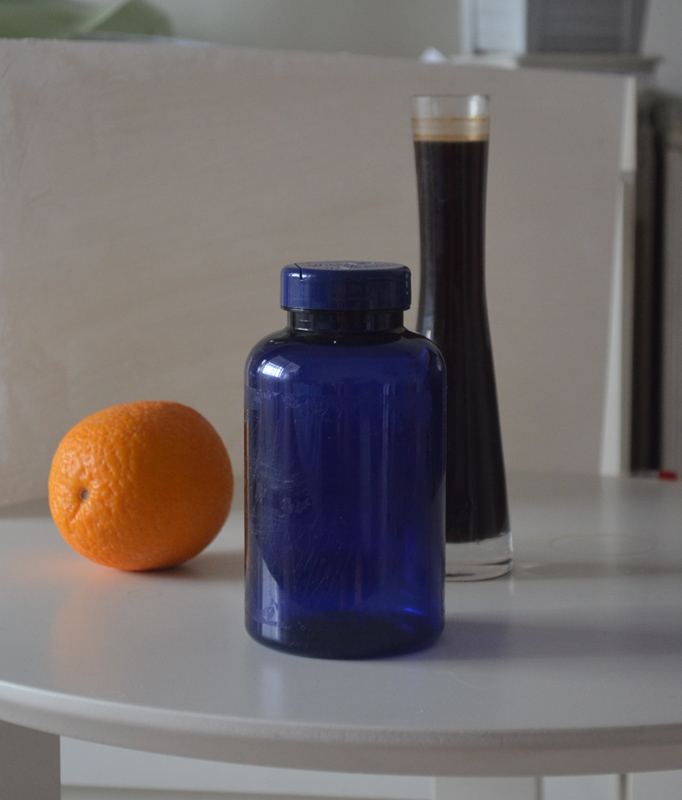
I didn’t have many jugs jars or a good choice of fruit at hand, my girlfriend had just brought some oranges down from up north so I decided to try and make a composition using them along with an aluminium bowl a glass vase filled with liquefied coffee and a jar of calcium tablets which I emptied and peeled off the label. I made some sketches in my sketchbook in charcoal.
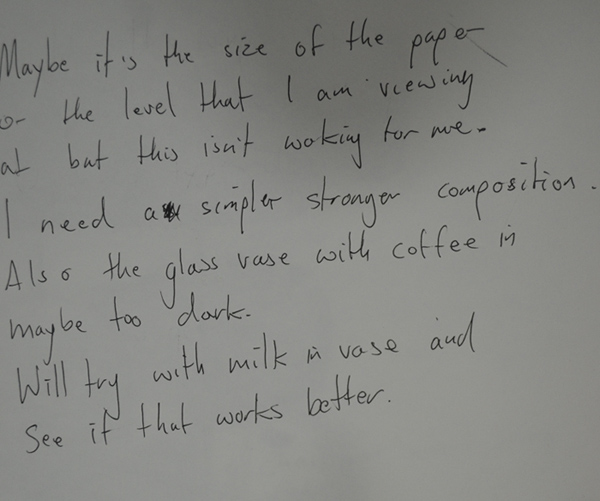
For the first two sketches I placed the objects on the top of the fitted unit at just under eye level lit by a bendy lamp. I decided that the top of the fitted unit was too high and I also wasn’t satisfied with the oranges in the bowl, I thought that less objects would make a simpler but stronger composition.


1st Sketch

1st Sketch

1st Sketch Notes

1st Sketch Notes

2nd Sketch

2nd Sketch

2nd Sketch Notes

2nd Sketch Notes

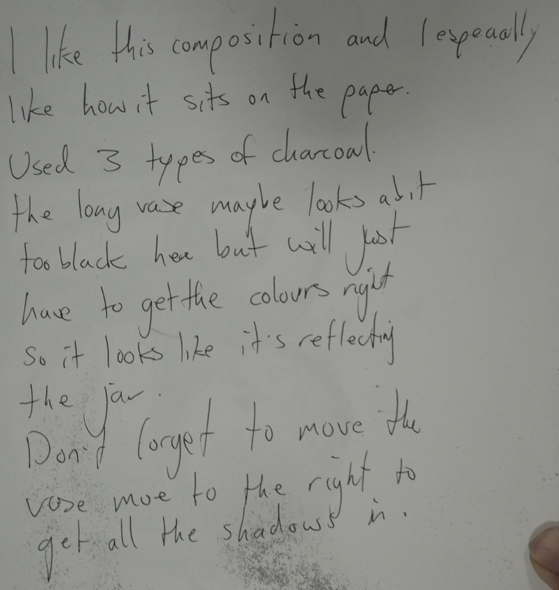
For the third sketch in charcoal I removed the bowl of oranges from the composition leaving 1 large orange plus the jar and vase and placed the objects on a round table at a lower level then I taped a sheet of paper to the back of the table to give it a plane background (always get distracted drawing backgrounds). The bendy light lit the composition from the right hand side. I did one more drawing with a 5B pencil to analyse the tones using a different monochrome media, between the two mediums  they helped me to ‘weigh up tonal variation without the distraction of different colours and hues‘.

3rd Sketch

3rd Sketch

3rd Sketch Notes

3rd Sketch Notes

4th Sketch -  Natural Light

4th Sketch

I have been working later than usual so all the sketches were done in electric light but the next day was an early finish for me and for the first time I got to see the composition with natural light shining through the window from the left and it looked a lot better and the highlights on the jar and vase were very attractive and so I decided to paint the tonal study in daylight which would take me the next 5 days, due to late finishes at short nights.

Chosen Composition

Chosen Composition in Natural Light

Materials Used for Painting

  • Canson paper for Acrylic and Oil
  • Acryic Paint: Titanium White, Payne’s Grey, Chromium Oxide Green
  • Brushes: Flat Brush, Pointed Round, Medium Wide (synthetic), Fan, Medium Wide, Detail Round, Pointed Round (hog’s bristle) 

The brief recommended that we paint small on A3 or A4 paper or card, the best acrylic paper I had was 15 x 18 inch and because this was going to be my first painting I wanted to use a quality prepared paper rather than Gesso on watercolour paper which was the only other paper I had.

Tonal Study on a White Ground

Tonal Study on a White Ground

I made a first thin off white acrylic wash with a very dilute wash of  yellow ochre thinking that there was an element of warmth in the composition in front of me, this was pretty silly of me I should have probably started with a grey wash, this was my first mistake. My second mistake was using a charcoal that was difficult to brush off and left quite heavy marks and so after I completed painting the objects I had to paint the background.

I started on the calcium pill jar first blocking in the form with the un-mixed chromium oxide green then painting in the lighter shades with a glaze of white mixed with green followed by the dark shadows and then the highlights in a very dilute mix of grey and then white for the lightest reflections.

With the vase I made the mistake of using Payne’s Grey straight which was too dark and so I went over with a mix of green and grey with the darker reflections with a green glaze before painting in the highlights in white.

To give the orange a bit of texture I stippled a base layer of paint and then once the paint was dry I depicted the various tones by blending the grey green and white with an almost scrumbling-like technique.

For parts of the painting I used water to moisture the paint and in the glazes  but I also bought a bottle of Liquitex flow aid that I used for the first time in this painting. For me this painting was not just a tonal study but the first painting that I had used a number of techniques, brushes and materials that I have never used in a painting before.

Notes:

I am not completely satisfied with the finished painting but I am happy that I learnt a lot here about how the acrylic paint behaves, making the following observations.

  • Acrylic paint looks darker on the palette than it does it does on the paper.
  • A diluted glaze of acrylic paint over the top of another layer of paint gets darker as it dries.
  • It’s best to start off lighter and then work darker when trying to match hues with a previous layer of paint. (There were times when I had to stop what I was doing and then came back to painting but had to clean the palette because the paint had dried).
  • Diluted paint is more likely to run when applied over the top of a dry layer of paint.
  • Washes are great for shadows.


The 4th Asia Plus Art Exhibition at the Queen’s Gallery

I had passed the Queen’s Gallery literally thousands of times ( I used to work acroos the road) and never realised it was  actually a real art gallery. I used to think it was an art gallery styled gimmick to get money off tourists never entering thinking that they would charge the earth.

For the last two years i had been visiting the national gallery which as an appauling colection in its permanent exhibition to say they charge toutists 300 baht or somewhere near and the temporary exhibitions are not very often.

After reading tripadvisor and finding out it ws only 30 baht admission and it was allegedly even better than the museum of contemporary art i ventured down to see what was on.

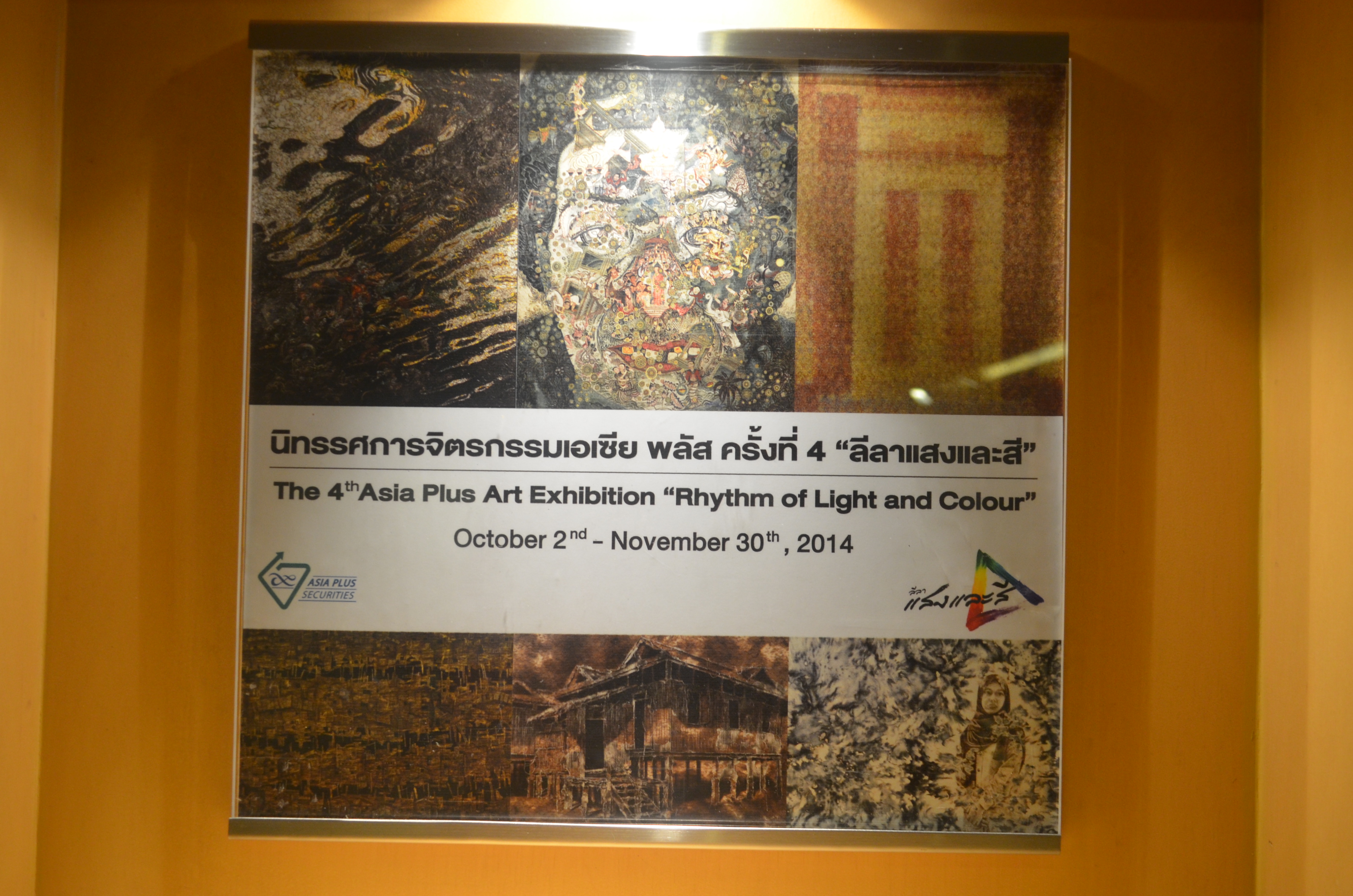
the sign reàd the 4th Asia Plus Art Exhibition ‘Rhythm of Light and Colour’ 2nd October to 30th November, this is what I found on the internet.

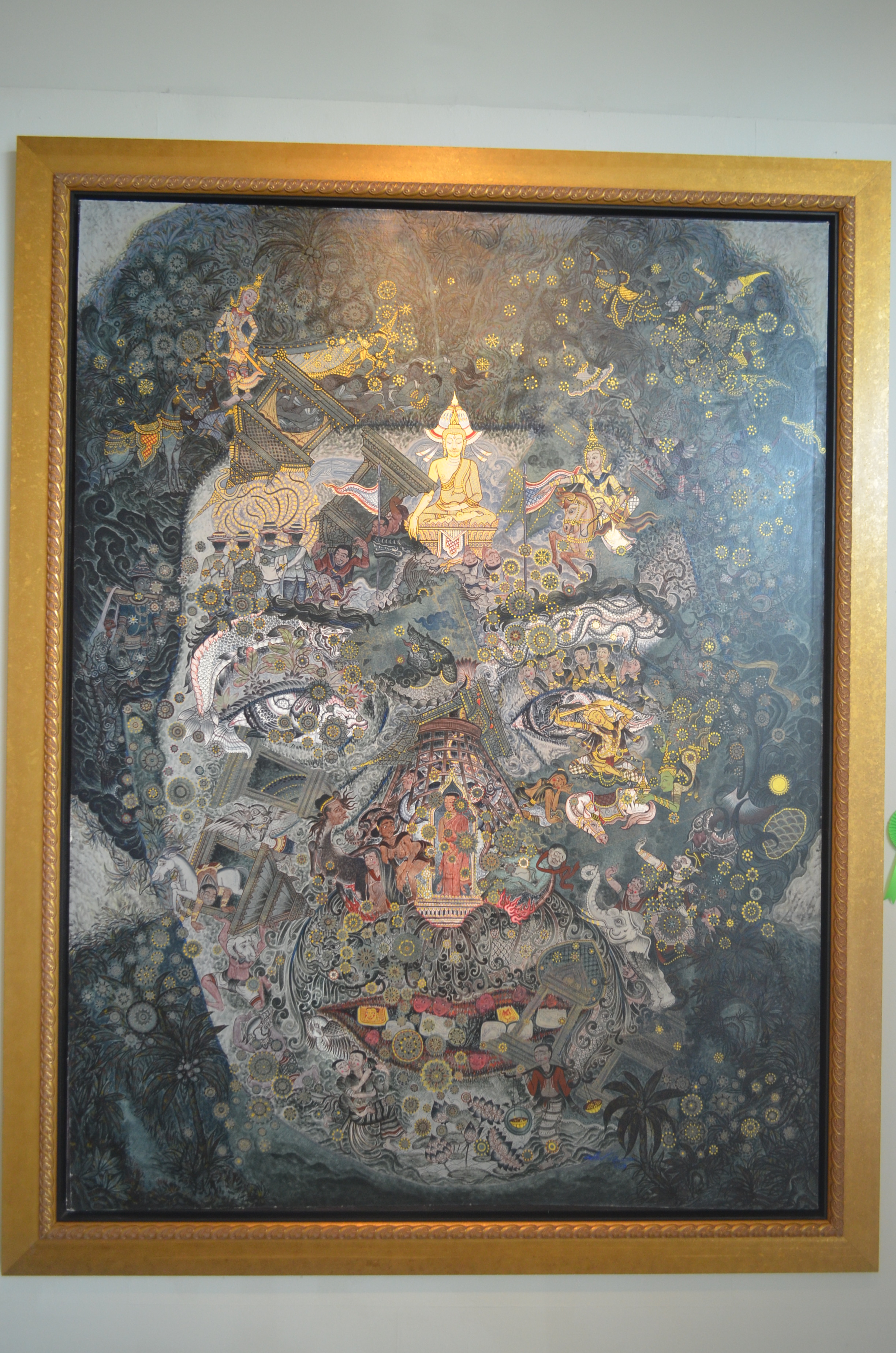
Asia Plus Security PCL showcases the best 56 paintings from the 4th Asia Plus Art Contest under the theme of ‘Rhythm of Light and Colour’ – 6 award-winning works and 50 additional pieces that received notable praise at the contest. The theme of the annual art contest was picked to encourage younger generations of artists to be more imaginative and creative in the composition of their work.

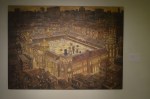
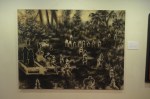
DSC_1673

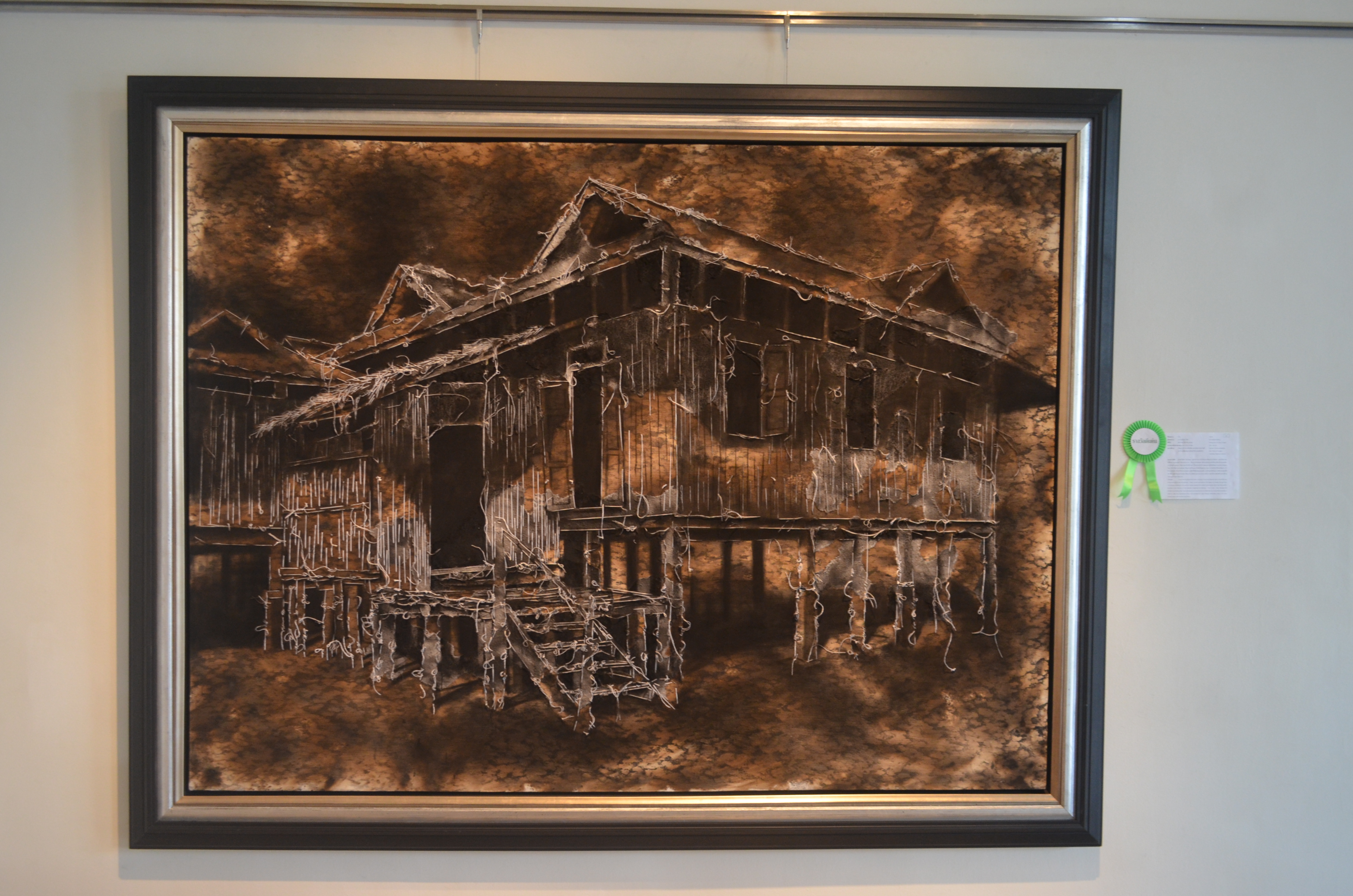
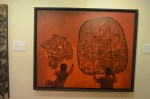
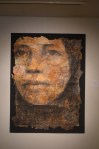
There were 5 floors in total at the gallery, the first floor at last year’s winners on, I think as they had rosettes on and this contest was far from over.

winner from first leg of contest

Painting on First Floor

winner from first leg of contest

Painting on First Floor

winner from first leg of contest

painting on First Floor

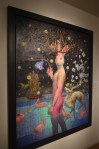
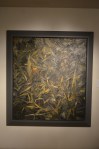
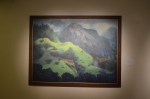
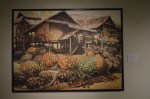
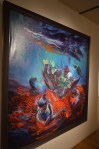
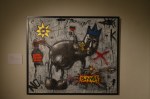
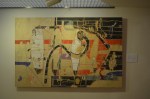
On the second floor there was a collection of entries from the first lot of competiton. From what I could make out they had been given a choice of themes for their paintings and a guess I would say they were Surrealism, Abstract, Politics, Thai culture, Modern Culture/architecture and Landscape, I say this because these kept repeating themselves in the paintings as I walked around the gallery.


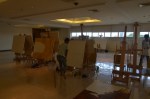
The third floor was closed and then on the 4th and 5th floor there were the next lot of competitors starting work on their submissions. It would have been good to have gone back while they were full steam to take a look at them using different techniques but time hasn’t allowed me to. I am hoping to go back and see the work that the next lot of artists produced.

The quality of work produced by these young Thai art students was excellent and very inspiring, I particularly like paintings of the traditional Thai houses. I am hoping to be able to get out and draw/paint some similar works over the duration of this course.

Transparent and Opaque 4 : Monochrome Studies

For this exercise I prepared two sheets of A3 300 gsm canson watercolour paper, one with an opaque mixture of titanium white and Payne’s Gray to create a light grey colour. The other with a dark wash mixture of Ultramarine and Payne’s gray.

Then I downloaded some clip-art of a winter tree that would help me to develop my own drawing in charcoal in my A4 sketchbook.

1 - Charcoal Drawing iin Sketchbook

1 – Charcoal Drawing iin Sketchbook

From there I copied the drawing of the winter tree onto the A3 sheet with the light coloured ground blowing away the access charcoal when I had finished. I then made a fresh mix of the the darker mixture of Ultramarine and Payne’s Gray and painted the branches with a fine hog’s bristle brush.

For the finer branches/twigs and for those appearing in the background I diluted the mixture to give me a half tone this created the illusion of being in the distance.

2 - Dark Branches over ight Grey Ground

2 – Dark Branches over ight Grey Ground

Once I was satisfied with the first painting it was time to start on the second painting, the one I had prepared with the Ultramarine/Payne’s Gray wash.

After I mixed the paint I realised I had forgot to draw in the tree with the charcoal and not having much time before the paint would start to try I decided just to draw in the trunk and the bottom branch and then build the rest up like a jigsaw. I enjoyed doing this in the Negative Space in a plant exercise in the Drawing 1 Course and this time using paint would be a tougher challenge. It didn’t let me down.

3 - Paintng Negative Space on dark wash

3 – Paintng Negative Space on dark wash

It took more than three times longer to paint the second tree as it did the first, I painted in the main negative shapes as I worked up through the tree on the right hand side reverting to the negative space on the left to help me mark where the next level of branches were.

Painting a simpler tree for this exercise would have probably been better, either that or just painting in the main branches using negative space and then the finer branches with the dark colour in half tone.

The main problem I experienced here was that the branches that were too thin due to making the negative space areas too big had to be widened by going over them again with the dark mixture.

Although the second painting looks very rough, it does look very natural, plus with the light grey paint being thicker or lighter in some areas it gives the impression that in those areas there is more light getting through the branches. This is often the case when you look at a tree and the space between the branches, in some places the sky looks darker due to narrower branches in the distance obstructing the light getting through. Part of the prepared paper was lighter than the rest so I intentionally put the light area at the top of the paper so that the top of the tree would have lighter tones, this paid off as it looks as if more light is getting through at the treetop.

The practice I got from both parts of this exercise will come in handy in the future when painting landscapes but I think I would probably use the two techniques together.